Showing posts with label Festival. Show all posts

Tuesday, 8 January 2019

Lev Tolstoy and American Philosophy

Lev Tolstoy and American Philosophy” (Лев Толстой и американская философия), including Canadian Doukhobors, was an open lecture with a Microsoft PowerPoint slide presentation given in Russia on October 11, 2018, at 5 pm by Dr. Irina A. Anosova.

This lecture stems from her 1995 PhD dissertation: "American Philosophy in the Context of Leo Tolstoy’s Spiritual Legacy." While researching Tolstoy, she became interested in Doukhobors, contacted Koozma, and came to Canada in 2005 and 2010 for field research. This short lecture was an overview of her message to appreciate Tolstoy and Doukhobors.

She was the second speaker for the event “Tolstoy Library: a century-long project” (Библиотека Толстого: проект длиною в век) celebrating the 190th birthday of Lev Tolstoy and the 100th anniversary of the Lev Tolstoy Library (No 2) on Vasilievsky Island, a bourough in the center of St. Petersburg, Russia.

Tolstoy Library and event poster.

The library was founded in 1918 and named in 1920 to commemorate the 10th anniversary of the death of L.N. Tolstoy. The library displays history, art, film and video, has meeting rooms and about 89,000 books.

Anosova's 23-slide presentation was in Russian, which she sent to Koozma to post online. We translated, edited, and added links. Slide #18 (Doukhobor meetings) was added because she mislabled slide #17 (USCC dove formation, 1999) as a “regular Doukhobor meeting.”

Download the enhanced Microsoft PowerPoint slide file (PPT 5,436 KB). <2018_Anosova_Tolstoy_American_Philosophy.ppt>

Dr. Anosova (centre) showing title slide in the library "green room".

Dr. Anosova reviewed the many American philosophers who influenced Tolstoy, and explained Tolstoy's connection with Canadian Doukhobors. She began with American transcendentalism from the 1700s through the mid 1800s (Franklin, Jefferson, Paine, Channing, Emerson, Thoreau); progressed to nonresisters (Mennonites, Quakers, Ballou, Garrison); then introduced Doukhobors.

Several photos gathered during her 2010 trip across Canada were used — women pulling plow, painting of a village in Saskatchewan, USCC centennial, USCC human dove formation, staff of the Doukhobor Discovery Centre, and a tribute to Koozma J. Tarasoff for all his help.

Other speakers presented the website “All of Tolstoy in one click” (Весь Толстой в один клик), readings from Tolstoy's three novels, the exhibit “Discovering Tolstoy again” (Открывая Толстого заново), and a Tolstoy family tree poster.

The event was announced in a poster (above), formal press release (below), then reported on a news blog with 6 photos (below) taken at the event attended by about 15 people. We hope many will see this story and the slides.

More by Dr. Irina Anosova,
Dept.of Philosophy, St. Petersburg State University of Culture and Arts, Russian Federation.

Wednesday, 13 December 2017

150 Canadian Stories of Peace — the book


Ottawa, Canada. Dec. 13, 2017 — In recognition of Canada’s 150 years of Confederation, a collection of stories — told by ordinary Canadians aged 4 to 88 — is released. The Anthology 150 Canadian Stories of Peace was compiled by Gordon Breedyk, Mony Dojeiji, Evelyn Voigt, and Koozma J. Tarasoff.

Read it free online at 150canadianpeacestories.com

‘We wanted to hear the voices of Canadians, and how they are contributing to a culture of peace,’ says Mony Dojeiji, member of the volunteer committee who gathered these stories. ‘The main criteria were that the stories be true and concise, fitting on one page.

From almost 200 submissions, 150 were chosen by an independent review committee for this book. We are honoured to bring them to you.’

There are stories expressed in prose, poetry and song. Stories that are joyful and funny. Stories that are sad and heart-wrenching. All inspire and invite reflection.

Stories take place in the schoolyard, homes and communities, and on the international scene, documenting Canada’s role in development and diplomacy.

The online book website links to a blog (for comments) and 17 story categories (shown here in alphabetical order):
  1. ADR/ Restorative Justice/ Mediation
  2. Business/ Private Sector
  3. Children and Youth
  4. Education
  5. Environment
  6. Family/ Relationship
  7. French/ Francais
  8. Heath/ Medical
  9. Indigenous/ First Nations
  10. Innovation/ Cutting Edge
  11. International/ Development Assistance
  12. NGO's/ Civil Society/ Co-op/ Unions
  13. Protest/ Activism
  14. Spirituality/ Inner Peace/ Reflections
  15. The Arts
  16. United Nations/ Peacekeeping/ Governance
  17. Women in Peace
The 4 organizers (listed below) believe that ALL stories of peace are important and have chosen to make them ALL available for free viewing on 150canadianpeacestories.com.

Submission of stories is not closed. Readers are invited to submit their stories which could be added to the website.

The book can be purchased at Amazon.com in paperback and Kindle e-book, or by contacting the organizers in Ottawa at 150peacestories@gmail.com. Images available upon request.

Project Organizers
More Information

Saturday, 20 May 2017

GREETINGS: 70th USCC Youth Festival

“Celebrating 70 Years ~ A Journey for Peace ~ Past, Present Future”
Grand Forks and Castlegar, British Columbia
May 19-22, 2017 

Dear Brothers and Sisters in Spirit —

Congratulations to the USCC, volunteers and visitors who made the annual Doukhobor Youth Festivals happen!

70 years is a lifetime for many people.
Well done our pioneering and younger friends!
In these many years, there have been many achievements:
  • You have shown that cooperation is possible in a world of run-away capitalism and that the road to a ‘win-win’ scenario is important for the sustainability of human life on Earth.
  • By bringing people together, you have achieved a unity of spirit and built bridges of understanding between the East and the West. You have reminded us that we are living in One World where ‘respect’ is a golden word.
  • By bringing together songs from the heart you have made the wider world more beautiful.
  • Finally, and most important, you remind us of the mission statement of our ancestors who sought to develop a world without wars. Burning weapons in 1895 is another way of saying that today we need to work actively to drastically reduce our military industrial complex, get rid of NATO, and encourage the development of an architecture for peace — such as setting up a Department of Peace in Canada’s parliament.
You have made us Doukhobors and non-Doukhobors proud by celebrating our unity of spirit and friendship, the beauty of song, the sound of joy, the sharing of wisdom for a nonkilling society, and the hope for a world at peace.

— Koozma J. Tarasoff and Kristina Kristova, Ottawa, Canada.

Monday, 1 May 2017

150 Canadian Stories of Peace

Many Canadians reading this have dedicated all or part of their lives for peace, in many ways. For Canada 150 we invite you to submit your stories about building peace in yourself, your home, community and/or beyond. Website: 150 Canadian Stories of Peace.


150 submitted stories will be published this year in a book. More stories may be published in future editions.


Read Book

150 Canadian Stories of Peace: An Anthology Paperback – November 23, 2017 – is available from Amazon.com.

Suggestions
  • Share a time when you chose peace over hatred, love over fear, nonviolence over violence, non-killing over killing.
  • Did you build bridges across people of differing ideologies and beliefs?
  • Do you have a story from your culture that inspires actions of peace?
  • Do your beliefs help you or others be at peace even when surrounded by war?
  • How did you stop a bully?

Guidelines
  • No age limit.
  • Language: English or French.
  • Submission deadline: August 31, 2017.
  • Focus on stories by Canadians at home or abroad.
  • Everything to be on one-side of one letter-size page.
  • Photos and illustrations may be published, no guarantee.
  • Your story must be true. Don’t be afraid to speak from the heart.
  • You may use a pen name (fictitious), but must reveal your real name to us.
  • Additional information (video, YouTube, and written) might be used for publicity, not the book.
  • About 1page, maximum 3,650 characters counting spaces, Times New Roman 12 font, including story title, author’s name/pen name, and 1-line bio info (latter if desired by the author).

More information

Send submissions (one page) and questions to

Contacts
  • Ms. Evelyn Voigt, evelyn_voigt@yahoo.ca (613) 721-9829 OR
  • Ms. Mony Dojeiji, mdojeiji@gmail.com (613) 793-1633

Organizers

Sunday, 9 August 2015

Whatshan Family and Friends Days 2015

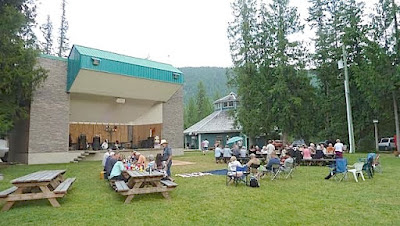
In July 2015 families attended Whatshan Family and Friends Days. This year the Festival was held on the weekend of July 10-12 (Fri-Sun). Previous summer events were called : Whatshan Music and Family Festival. Invitation flyer (PDF) — 18 PhotosSatellite map.


Danny and Kathleen Picton of Surrey, British Columbia who attended this year's event sent 18 photos showing plans for the future, the Doukhbor Sunday morning assembly, fire and food preparation, and many happy people. Meals were $14-$26, kids half price. Music by That Girl and Earl, The Balladeers, Jason Markin, and open mic with other musicians, singers and/or poets.

At Whatshan Lake Retreat you can get away from it all to enjoy quiet peaceful walks and moments of contemplation. Paddle your canoe or kayak on the lake or plunge into bracing cool waters of the swimming hole in the nearby river.

In the winter bring your snowshoes and skis and trek through over 200 acres of wilderness and beyond and then warm everyone up with some hot chocolate in one of the modern cabins near the Monashee mountains. The site is 15 km by road from Edgewood, and 75 km. north of Castlegar. See satellite map.

The Retreat Centre Lodge offers full facilities for seminars, workshops, family gatherings, weddings, concerts, and youth activities. Their acoustically engineered stage is perfect for music festivals and plays under the stars. No matter what time of year, Whatshan Lake Retreat is a great meeting place for large groups, friends and family.


More

Monday, 3 December 2012

Q52: Tell me about your 1960s experience

asks: From: Carl Stieren, Ottawa, Ontario

Introduction: This question was asked at the Launch party November 3rd, 2012 for Carl Stieren's board game 'It Happened in The 60s'. The event took place at HUB Ottawa as a fund-raiser for the production of a new game. See photos.

Carl is a writer, editor, former journalist, web content developer and trilingual communications specialist (English, French and German) with experience in government, business and NGOs. For some five years he worked as Co-ordinator of the Canadian Friends Service Committee and for eight years was Associate Editor of Federations magazine at the Forum of Federations. Recently, he was Communications Co-ordinator at the Ottawa International Writers Festival.

To play Carl's game, you roll the dice and travel back to the 60s, visiting 31 states and 6 Canadian provinces — plus an offshore square, because what's a 60s game without the Beatles and the Rolling Stones? If you land on a Karma square or a Trickster square, your life could go sideways just like in the 60s.

Answer

To gain a flavour of the fascinating 1960s as I recall, I need to go back two decades earlier.

In the late 1940s when I was a high school student at the Saskatoon Technical Collegiate Institute (Saskatoon, Saskatchewan, Canada), I often went to the Ukrainian Labour Temple where I took gymnastic lessons. On one of these evenings, the Temple hosted a special visitor — a young master banjo player and singer from the USA. We all gladly joined in singing peace and freedom songs. The musician was the famous Pete Seeger whose songs became popular in the 1960s.

In 1957, I attended the War Resisters International Triennial Conference in England just prior to going to the 6th World Festival of Peace and Students in Moscow, USSR. At the Society of Friends House in London, my roommate was Quaker Bayard Rustin (1912-1987), a close associate of Martin Luther King Jr., A. Phillip Randolph (1889-1979), and A.J. Muste (1885-1967). Later, in 1963, Rustin organized King's March in Washington where the famous speech 'I have a dream' was presented.

In the early 1960s, I was one of the core organizers with Peter G. Makaroff (1894-1970) of three peace demonstrations on the Canadian prairies. We titled them: "A Manifestation for Peace." Peacemaker A.J. Muste from New York spoke at one of these gatherings in Suffield, Alberta, urging governments to cease research and production of chemical, biological and radiological weapons. Another gathering for peace was held at Orcadia, Saskatchewan. The following year, on June 27th, 1965, 1,500 people stood or sat in the rain for four hours in a bid for non-violent approach to peace. International peacemakers Mulford Q. Sibley (1912-1989) and Frank H. Epp (1929-1986) appeared at the Canadian Air Force Radar base, Dana, Saskatchewan, in a peace demonstration co-organized by Doukhobors, Mennonites, and Quakers with a common concern for the survival of the human race.

Singing was part of all of these memorable 60s events with many popular songs coming from Pete Seeger and friends. Such as 'Where Have All the Flowers Gone?'; 'Last Night I Had the Strangest Dream'; 'We Shall Overcome'; 'If I Had a Hammer'; 'May There Always Be Sunshine'. My ancestors, the Doukhobors, participated at Expo in Montreal in 1967. Since then Doukhobor choirs have appeared throughout Canada and the USA as well as the USSR at other expositions and festivals stressing the desire for harmony in human relations analogous to the harmony in their choral art.

Yes, the 1960s was a busy time. Hopefully we have all learned something from that era about the need for peace, equality, respect for nature, honesty and compassion in human relations. Indeed, let's accept the wisdom and 'Give Peace a Chance'! Otherwise, 'When Will We Ever Learn?'

More: Questions and Answers, Comments

Sunday, 9 September 2012

Friends for Peace Award to Koozma


Koozma Tarasoff will be recognized with a Friends for Peace Award on Saturday, September 29, in the Ottawa City Hall rotuna during the 10th annual celebration of Peace Day.

Begining at 11 am, Friends of Peace Day events include a proclamation of Ottawa as a City of Peace, photo and art exhibits, music, dance, panel discussions, exhibits, good food, etc. Three awards will be presented from 2:30 pm to 3:30 pm:
  1. Special Award to the late Jack Layton NDP recieved by wife Olivia Chow MP
  2. To June Girvan introduced by Ernie Tannis
  3. To Koozma Tarasoff introduced by Alex Atamanenko MP
These 3 people join a list of peace activists previously awarded — Jean Béliveau, Bruce Cockburn, Ojshigkwanàng - William Commanda, Marion Dewar, Jean Goulet, Max Keeping, Elizabeth May, Hans Sinn, Dave Smith, Daniel Stringer, Murray Thomson, ...

Continuing his life-long peace work as a Doukhobor, Tarasoff has been a volunteer photo journalist, historian and promoter of the organizations sponsoring the annual Ottawa Peace Festival since its inception in 2007. During this 6th year, he plans to cover each of the 17 events. Koozma's daughter, Tamara of Wakefield, Quebec, plans to video the award presentations for posting on the Internet.

Friends of Peace Day is one of 17 free events scheduled during the 12-day Ottawa Peace Festival (Sept 21 - Oct 2). This 6th annual festival occures at 14 locations around the capital. Click here for the schedule of events and media release. Click on map ballons and buttons to zoom in on event locations and descriptions. See Koozma's festival history, photos and previous reports.

Thursday, 31 May 2012

Q48: How Do Saskatchewan Doukhobors Preserve Their Heritage?

From: Jarred Webb

BC Doukhobor youth have a wide array of ways to learn and interact with their cultures, Youth Festivals, Youth Councils, Russian lessons in schools, among many more, but what do Saskatchewan youth do to preserve their heritage? Do they put on festivals there? Partake in Doukhobor celebrations? Learn Russian? Being of Independent Doukhobor origin, it has been easier for their families to assimilate into mainstream society; so how do the youth preserve their tradition?

Answer
In June 2020, we posted a similar question:
8.  How do I preserve the Doukhobor ways? (April 20, 2007)
Strong assimilation forces of the wider society have drastically changed the landscape of the Doukhobor youth in Canada since 7,500 of their ancestors arrived on the Canadian prairies in 1899.

Indeed, two large Community Centres (in Grand Forks and Castlegar-Brilliant), a strong USCC organization, Iskra publication, an active choral program peaking at the annual Youth Festivals in May, Russian language programs, sobranie gatherings, the Doukhobor Discovery Centre, and a number of Doukhobor-led organizations are major institutional supports helping BC youth to preserve their traditions.

With a smaller population, Saskatchewan Doukhobor youth have their supports, too, but in a more challenging manner. These supports include the following:

Over and above the community supports, mention must be made of the structures that have brought all the Doukhobors together, young and old. This includes many activities held during the 1995 and 1999 Centennial celebrations of the Doukhobors in Canada especially that of the unique Spirit Wrestlers Exhibit (1996-1998) at the Canadian Museum of Civilization. Also one needs to mention two other structures that today serve as a unifying force: the CCUB Trust Fund Committee (established in 1980) and the Council of Doukhobors in Canada (which evolved out of the Centennial celebrations).

More: Questions and Answers, Comments

Monday, 21 May 2012

65th Annual Doukhobor Youth Festival

The Castlegar district of British Columbia was the site of the 65th Annual Union of Youth Doukhobor Youth Festival on May 19-20, 2012. On Saturday night a full house of over 1,000 people came out to watch a multicultural program of singing, music, and speeches at the Brilliant Cultural Centre — the largest cultural venue in the area. The Castlegar News briefly reported on this outstanding event, with links to images of the Festival. Monday, May 21st was celebrated with a sports day.

Among the many messages sent to the Festival was that by Koozma J. Tarasoff and his wife Kristina Kristova from Ottawa, Ontario. Here is their message:

Dear Friends:

In celebrating the youth through the ages, let’s remember our ancestors, their youth, and our historic roots. When they came in 1899 from Russia to Canada, many of them were young in age and strong in spirit. They continued to live with the fundamental Doukhobor values: nonkilling, kindness, love and compassion.

In 1868, the year after Confederation, the Militia Act was amended significantly. It now limited exemption to specific religious groups (Quakers, Mennonites and Tunkers) and others of "any religious denomination, otherwise subject to military duty, but who, from the doctrines of his religion is adverse to bearing arms and refused military service."  The exemption was "upon such conditions and under such regulations, as the Governor-in-Council may from time to time prescribe." Members of the named religious groups had to provide certificates of membership. This legislation limited conscientious objection to a religious basis and made it subject to conditions or regulations set by cabinet. (A Short History of Conscientious Objection in Canada)

In December 6, 1898, the Doukhobors were added to a similar legislation of an Order-in-Council. This was a crucial factor for them to emigrate to Canada. The exemption from military service by these traditional peace groups was a collective expression that war and killing are wrong. If the new Order-in-Council was not passed in 1898, it is unlikely that our ancestors would have come to Canada and this Festival would not take place. Thanks to the precedent set by earlier Conscientious Objectors and the cooperation of the Canadian Government, we today are able to enrich the Canadian society with ideas and actions of nonkilling peace.

Some of the COs who refused to participate in the US-Canada War settled in the town of Stouffville near Toronto. Their descendants in early May of this year asked their Conservative MP to ‘tone down’ a June event scheduled as a celebration to the Bicentennial of the war of 1812. They said ‘it does not accurately reflect the history of the town, which was founded by Mennonites who objected to war’.  The spending by the current government of $30 million in parades, displays, and reenactments of the battles is an attempt to raise the profile of militarism and military history. (War of 1812 celebrations an 'affront' to Ontario town's pacifist roots, The Globe and Mail, Jun. 18 2012.)

As people of conscience, we ought to literally join hands with brothers and sisters of conscience and with one voice call for the building of a culture of peace in Canada and abroad. Let us give hope to our youth — to our children, and our grandchildren. Let this be a message to Canadian Parliamentarians to return to a sane domestic and foreign policy where might is no longer right, where love and nonkilling is the path for Canadians and humanity around the world.

We have to teach our children, our youth, the beauty of singing, and singing will teach them the beauty of life with values such as nonkilling, kindness and compassion.

We wish you a joyful  and memorable 65th Annual Youth Festival.