Showing posts with label Saskatchewan. Show all posts

Sunday, 6 March 2022

90 Years of Memories

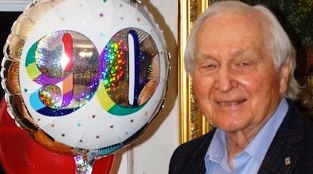
On February 19, 2022, about 60 people and I celebrated my 90th birthday ONLINE!

My wife and our daughters arranged the event which featured prerecorded video messages, phone calls, and some sent an email or letter. Thank you all.

In early February my daughter Tamara and her husband John, and Kristina with her daughter Milena, decided to arrange a virtual party. They invited many people to submit short video messages at a website, or any way the guests would like. About 60 people participated resulting in a 1.5 hour video and more than a dozen emails, cards and letters.

Kristina wanted to create a photo album of my life, and we selected about 50 photos which became a slide show presentation of my '90 Years of Memories'.

See everything here:

  • Videos submitted (1.5 hours) — Link to be added.
  • Slide show of my life — Link to be added.
  • Emails received

During the planning process, I began to reflect on my 90 years and listed these highlights of my life so far, a short version of my biography and 50 Years of Doukhobor Studies.

  1. Born in 1932 in this farm house to parents and grandparents who came from Russian Doukhobor roots. Believed that hospitality, love and nonkilling are the way to a world without wars.

  2. Met Tyrus R. Cobb world famous baseball pioneer. Invited for tryout in 1953 to Pittsburgh Pirates in California. Did not make it, but exercises that I learned from Lloyd Percival of CBC Sports College of the Air persist today 70 years later.

  3. At the University of Saskatchewan in Saskatoon, where I took my BA in Arts and Sciences in the 1950s, I produced 50 monthly journals of The Inquirer at my grandparent's attic next door, which led me to become a journalist, photographer, scholar, and peace activist.

  4. After attending the World Festival of Youth and Students in 1957 in Moscow, this led me to make 12 additional trips to the Soviet Union and Russia as a bridge-building effort between the East and the West (1957, 1964, 1980, 1991, etc, ). The wisdom of getting to know the stranger persists today as one of key steps to help the people and the planet to survive.

  5. In the early 1960s, at UBC in Vancouver, I was privileged to get my MA in Anthropology and Sociology, with my thesis on 'A Study of Russian Organizations in the Greater Vancouver Area' (PDF, 15 GB). The Cold War, I discovered, was the critical element in what brings people together and what splits them apart.

  6. In 1964, as a Russian and English speaking grad of UBC, I was invited to the International Ethnological Congress in Moscow where I met anthropologists Margaret Mead and Sol Tax.

  7. In 1980, as guest Doukhobor peacemaker and photo journalist, I reported on the Summer Olympics in Moscow as a Slavic representative for North and South America. What an awesome responsibility!

  8. Over the past 60 years I have organized a number of scholarly ethnographic studies and exchanges across North America (including a 1990 3-month North American Ethnographic Expedition with Russian scholar Svetlana Inikova), the Soviet Union and Russia on my ancestors the Doukhobors and East-West understanding. Together with my work in the provincial and federal governments as social scientists, this led me to publish over 25 books and 50 articles; the gifting to the Saskatchewan Archives and BC Archives major collections of textual materials and photographs on Doukhobors, rural development, Native Indians, and ethnography; the creation of a Spirit Wrestlers website and blog with Arizona scholar Andrei Conovaloff.

  9. In November 2007, I presented a paper on 'Tolstoy and the Doukhobors' at the First Leadership Forum in Hawaii where the Center for Global Nonkilling formed; and served as reporter and photographer for 13 Ottawa Peace Festivals.

  10. In 1982 co-organized with Community Doukhobors, the First International Intergroup Symposium of Doukhobors, Molokans, Mennonites and Quakers, held in Castlegar, British Columbia, with many prominent people including the great grandson of Lev N. Tolstoy, a major world writer and proponent of nonkilling. The meeting endorsed a letter to the UN on disarmament and getting rid of wars.

  11. With distinguished Doukhobor lawyer Peter G. Makaroff (the first non-Anglo-Saxon grad in Western Canada with a law degree in 1918), and participating Doukhobor, Quaker and Mennonite reps, in 1964 and 1965, I coordinated and helped organize four major peace manifestations in Western Canada urging the government to cease research and production of chemical and biological weapons of mass destruction, and work towards the survival of our human species.

  12. Between 1996 and 1998, served as guest co-Curator with Dr. Robert Klymasz on 'The Doukhobors: Spirit Wrestlers' exhibit at the Canadian Museum of Civilization, commemorating the centenaries of the  Doukhobor destruction of weapons in 1895 in Russia and the January 1899 arrival of the first Doukhobors to Canada.

  13. We all know that it takes a village to raise members of a family. My grandparents and parents along with my newly acquired families and offspring deserve praise for their support. Son Lev is professor at Memorial University in Newfoundland where he is modeling the last Ice Age and is searching the major parameters of climate change. Daughter Tamara, now retired as a museum professional, recently spent the last three years working in Nunavut as Project Manager, Wrecks HMS Erebus and HMS Terror National Historic Site. Their spouses, Dorothee Bienzle is an accomplished researcher and doctor, and John Pinkerton is a retired international manager for Parks Canada. Their children Jaspar and Katya along with Tamara and John's offspring (Nicholas and Elena) are outstanding students, athletes and outdoors people like their parents. I always marvel at being so lucky to be part of their family circle. 

  14. As well, I marvel at the challenge of keeping alive my 30-year marriage with Kristina Kristova, a pioneering journalist who once served for 24 years as anchor person with the Bulgarian National Television. Her daughter Milena is a music teacher in Ottawa, while son Orlin is in Sofia, Bulgaria, as a professional keyboard composer / musician. Kristina introduced me to her most fascinating Bulgarian community who have given me the title of 'Honourary Member' although I have not learned much Bulgarian language.

  15. In the 90 years of my life, this family along with all the people that I have met around the world (in person, in books and in the media), I consider all of you remarkable and many are friends and wisdom people. Bolshoe spasibo! Thank you very much! You have taught me so much. I wish all of you to live at least to 90 with good health, joy, peace and happiness.

  16. Personally, I look forward to many more years of productive life. In my work, I never got rich in money, but rich in ideas, in friendship, and in the vision of my ancestors for a peaceful world without wars.

Monday, 25 October 2021

Jim D. Kolesnikoff (1936–2021)

Jim D. Kolesnikoff, a stalwart of the Doukhobor Movement, died in Hamilton, Ontario on June 29, 2021, remarkably on the exact date of the Doukhobor Arms Burning in Russia 126 years ago. 

Three important historical occasions brought Jim and myself together.

  1. 1957 — December. At the all-Doukhobor youth conference: ‘Building bridges of understanding’. Jim was one of the hosts. The Saskatoon Doukhobor Students’ Group initiated meetings with Community Doukhobor students in British Columbia to jointly discuss ‘Where do we go from here?’ Jim is seated on the right end in this group photo. (See: ‘Young Adult Tour of Western Canada’, The Inquirer, December 1957, pages 8-12.)

  2. 1982 — June 25-28. During the International Intergroup Symposium that brought together over 1,000 Doukhobors, Mennonites, Quakers, and American Spiritual Christians from Russia, to Castlegar, BC. Jim served as Secretary of the Convening Committee of four (Jim Kolesnikoff, John J. Verigin Sr., Jim E. Popoff, and me Koozma J. Tarasoff as Coordinator) and signed a letter to the United Nations.

  3. 1999 — October 22-24. At the Doukhobor Centenary in Canada conference held at Ottawa University, Jim presented: ‘Understanding violent behaviour: the “Sons of Freedom” case’, published in Doukhobor Centenary in Canada (edited by Andrew Donskov, John Woodsworth and Chad Gaffield), 2000, pages 114-128.

These events brought Canadian Doukhobors together to focus on examining our identity in the new world today.

  • ‘Who are we?’
  • ‘What contribution can we make to world society?’ 

That’s how I knew Jim.

Jim was born in Watson, Saskatchewan. His family moved to British Columbia where he graduated from high school in 1954. For several years he worked for the Sunshine Valley Co-op and the Grand Forks Credit Union and was an active member of the USCC Union of Youth in a program of singing, the Russian language evening school program and Iskra.  

In the 1960s, Jim attended Moscow State University where he received his MA in Russian language and literature, returned to Canada, and in 1978 obtained his PhD in Slavic Linguistics at Simon Fraser University in Vancouver.

A big event in Jim’s life was meeting Nina, a Polish student on scholarship in Moscow. They married in 1968 and moved to Canada the same year. They lived in Edmonton, Alberta where Nina completed her PhD studies in the Department of Comparative Literature. The couple moved to Hamiliton, Ontario where Nina became a professor of Slavic Studies at McMaster University. Jim commuted to Toronto where he worked with a company (dissolved in 2002) importing precious and semi-precious metals, and jewelry from Russia to Canada.

In 2002 I published a short biography of Jim and his wife: ‘Slavic Scholars Broaden International Boundaries’, Spirit Wrestlers: Doukhobor Pioneers’ Strategies for Living (2002), pages 232-233. (PDF, 1.3 Mb)

Jim was interviewed by Gregory James Cran for his doctoral thesis: 'A Narrative Inquiry into the Discourse of Conflict among the Doukhobors and Between the Doukhobors and Government', University of Victoria, 2003, pages 105, 128, and 200. (PDF, 5 Mb). The thesis was modified into a book published in 2011 titled: Negotiating Buck Naked: Doukhobors, Public Policy, and Conflict Resolution, where Jim is quoted on page 81. (See my book review.)

Published Obituaries for James (Jim) Kolesnikoff

  • Iskra, No. 2166, September 2021, pages 35-38. Bilingual Russian and English.
  • Grand Forks Gazette, (photo) June 12, 2021. Photo 
  • Today in BC, Black Press Media (Surrey, B.C.) June 12, 2021

Joan Kazakoff Parker (1934–2021)

 Joan Parker (née Kazakoff) of Mississauga, Ontario, Canada, died June 10, 2021 of stage 4 lung cancer. 

She phoned me a few days earlier saying that she was alive and in good humour. 

Joan was born in the Kamsack area of Saskatchewan to Doukhobor parents.

Her son Jeff was looking after her in the home where he was raised and where her husband George, a professional engineer, died May 5, 2018

Surviving are two children Jeff and Wendy, and Wendy’s son Aaron who is а professional chef in London, England.

Her father George Kazakoff miraculously survived the as-yet-unsolved train explosion near Farron, British Columbia in October 1924 which took the lives of Peter V. Verigin and eight others. 

Joan lived in central California where she attended college. She learned of a cousin, Allan Zolnekoff (1953–), adopted by a Dukh-i-zhiznik family near Los Angeles. His mother was her aunt Dunya "Doe" Samoyloff. And, Allan is an adopted cousin of Koozma's webmaster, Andrei Conovaloff, who shared the same step-grandmother. Small world.

In 1984 she toured the Soviet Union with a group that included my mother Anastasia. Smaller world.

Joan was an interesting personality that I have known for many years by email. Though we never met, I interviewed her and published five stories (below). 

Joan did watercolour and acrylic painting, she made jewelry, and became interested in the culinary arts. At the age of 76, Joan Parker published Joan’s Favourites, a cookbook of 350 recipes from around the world including a section from her Russian Doukhobor heritage. The book is liberally embellished with 28 colourful wisdom proverbs I liked so much that I gathered them into a list posted in 2011.

Items I published about Joan:

Saturday, 13 February 2021

Remembering William Kanigan. (1931–2021)


William W. (‘Bill’) Kanigan of Saskatoon, Saskatchewan died January 15, 2021. His compassionate heart touched many lives, including mine. Bill was a generous friend who encouraged and financially helped me with my research during the Doukhobor Centennial in 1995.

In 1989 we published an article about him in Spirit-Wrestlers’ Voices. In 2001 he helped Jon Kalmakoff document the Kylemore Doukhobor Colony for Saskatchewan History. In 2017 we published and replied to an essay he composed with his son Kim about two streams of Doukhobors.

Bill is best known as ‘a responsible entrepreneur from the heart’ who for 27 years co-owned and operated the successful Buy Rite Furniture business in Saskatoon, Saskatchewan. He attributed his success to the importance of promoting and practicing co-operation, being gentle, solving problems with thoughtfulness and kindness.


The photo above shows the former Buy-Rite Furniture building (originally the Cockshutt Plow Co. warehouse) at 132 Idylwyld Drive, Midtown Saskatoon. The far end of the building was being demolished. May 17, 1988. Historical Collections, Saskatoon Public Library.

Photo below shows the Kanigan's furniture and appliance store at 220 20th Street West, Saskatoon. August 26, 1965. Local History Collections, Saskatoon Public Library


In 1962, Rnold H. Smith and partners purchased Kanigan Home Furnishings, which Smith operated until 1967. He eventually partnered with Bill Kanigan to establish Buy-Rite Furniture, and was joined by his brother Cecil Kanigan, who died in 2018. Over the years the store grew to a chain of eight province-wide stores. The Buy-Rite Furniture Factory was 2 kilometers north of the showroom at 901 1st Ave N, Saskatoon for railroad access. Smith retired from Buy-Rite in 1985, and died in 2008.

1950s
Bill was brought up in the Community Doukhobor settlement of Kylemore, Saskatchewan by devout parents William George Kanigan and Mary Kanigan (nee Makortoff) who instilled in him the values of compassion, honesty, usefulness, and a belief in nonviolence.

At home, Bill would frequently hear the importance of the Golden Rule, ‘Do unto others as you would do unto you.’ This keystone ethic he applied both at home and at work. He believed that an organization rarely survived for any length of time unless it was ethical and guided by ethical leaders. Although this formula placed a heavy burden on the individual and extracted a heavy price, Bill said that ‘it can be worth the effort’ as reflected in the success of his business.

In his retirement years, Bill, like his parents, was an accomplished singer in traditional Russian. He was a regular member of the Doukhobor Society of Saskatoon and participated in Sunday meetings and the summer outdoor Doukhobor bread baking project at the annual Saskatoon Exhibition. He recently served as an ‘Elder’ in the Society.

Visiting Russian Doukhobor artist Volodia Gubanov (left) shows
his sketch of Bill Kanigan (right), Saskatoon, SK, July 22, 1995.

In early 2001, Bill contributed his family history and 8 vintage photos of his ancestral Kylemore Doukhobor Colony for an article written by Jonathan Kalmakoff, published in the journal Saskatchewan History.

Family was important to Bill, always supportive and encouraging. In the summer of 2001, he and his younger son Ryan went to Moscow, St. Petersburg and other places in Russia, visiting the country of their ancestors. This was one of their highlights in being together.

With Bill's support, his oldest son Kim established a tool and die-making business in Saskatchewan and Nova Scotia. Bill described his son as ‘an entrepreneur with a conscience’ because his son refused to produce several thousand military badges — an action very consistent with the Doukhobor nonkilling legacy. Later, Kim migrated from Canada to the coast of Queensland, Australia, where he used his mechanical skills to refurbish vintage candy machines and founded Stillwater Sweets (Facebook).

In 2016, Bill and Kim communicated by Skype, and often pondered 'what is a Doukhobor based on historical and current facts'? Their dialog evolved into an essay 'The Two Streams of Doukhobor Faith: Apostolic and Inclusivist', published in the Saskatoon Doukhobor journal, The Dove, in 2016.

Bill Kanigan is survived by his wife Doris, children Karen, Kim (Leslie) and Ryan (Nancy Paris), grandson Robin and step-grandchildren Camrin, Megan and Mia. He leaves his sister Natalie Austin, sister-in-law Bernice Kanigan, nieces and nephews. A memorial is planned for a later date. Bill will be missed by a lot of people far and wide.

He was a friend indeed. We enjoyed publishing his essays.


Notes

  1. Three images of Bill, from (left) sketch by visiting Russian Doukhobor artist Volodia Gubanov, July 22, 1995, (center) Koozma J. Tarasoff, published in Spirit Wrestlers: Doukhobor Pioneers' Strategies for Living (2002), page 221; and (right), obituaries online, below.
  2. 'File S-SP-A-25099 - Bill Kanigan' contains 16 Black & White photos of Bill Kanigan created on 12 Feb 1986, The StarPhoenix Collection, City of Saskatoon Archives.
  3. Rnold H. Smith biography in Pederson, Jen. ‘A Seat on Council: The Aldermen, Councillors and Mayors of Saskatoon - 1903-2006’, Edited and Revised by Jeff O’Brien October 15, 2015, The City of Saskatoon Archives, Office of the City Clerk, page 106.
  4. ‘Responsible Entrepreneurship From the Heart’, in Koozma J. Tarasoff. Spirit Wrestlers: Doukhobor Pioneers’ Strategies for Living (2002): pages 219-221. — Much taken from Tarasoff, ‘Responsible Entrepreneurship: an attitude of the mind’, Spirit-Wrestlers’ Voices: Honouring Doukhobors on the Centenary of their Migration to Canada in 1899, 1989, pages 111-115.
  5. Obituaries online for William W. Kanigan, Saskatoon, Saskatchewan (December 24, 1931 - January 15, 2021) — Mourning Glory Funeral ServicesThe Star PhoenixTribute Archive.
  6. Bill Kanigan of Saskatoon, Saskatchewan, and his son Kim Kanigan, Queensland, Australia, posted a paper in The Dove, April 2017, pages 5-15, 'The Two Streams of Doukhobor Faith'. In response, K.J. Tarasoff and A.J. Conovaloff replied with: ‘Q80: Two Streams of Doukhobors?’, Spirit Wrestlers blog, 12 July 2017. — Are there two Streams of Doukhobors? Apostolic and Inclusivist?
  7. Kalmakoff, Jonathan J. 'The Kylemore Doukhobor Colony', 20 November 2010, published in Saskatchewan History (Spring/Summer 2001, Issue, Vol. 63, No. 1) , pages 9-18, references on pages 45-47. — See article in online journal (PDF); and at the Doukhobor Genealogy Website in PDF and HTML.

Tuesday, 6 October 2020

Petrofka Ferry

Saskatchewan boyhood memories by Nick Troubetzkoy
 
Never before published tales of Doukhobor rural life in the 1940s  family farm, banya, baseball field, uncle John's general store and petro station, brick making, folklore, river, water hand pump, electricity, vodka still, cows, fishing, chickens, berries, outhouse, ice skating, ... 

For a kid there was an exciting grab bag of things to see and do along the North Saskatchewan River near Petrofka and on the ferry crossing the river, and on the farm, which was Uncle John's farm.

Orange markers show locations added to map: 'Blaine Lake and Langham, 
SK Doukhobor Settlement, 1899-1932', by Jonathan Kalmakoff.
Green insert map shows location of Petrofka north of Saskatoon, Saskatchewan.

Uncle John had kids, Phil, Donnie and Sonia, and his wife was Mabel. They all lived together in a farmhouse with my grandmother and grandfather on my mom's side (the Gulioffs).

Uncle John, my mom Lucy, Uncle Eli, Uncle Jim and Auntie Fannie, were all brothers and sisters.  There were five of them and they all lived around the great river and near John’s farm at that time. 

The farm was the first place you would hit when you crossed the river on the ferry and reached the shore on the other side.

Just drive a city block along the old dirt road from the ferry landing pad and there you are at a big flat area where Uncle John had put in a baseball field and where people from the entire area would come and play baseball.

Example.
Uncle John sold two types of gas and diesel and K-oil [kerosene] there outside of his local general store just by the ball field, with four grand old mechanical pumps outside. You had to pump fuel into the tall glass cylinders at the top of these pumps by hand and keep them topped up ready for action.

Us kids were given the task of keeping the glass cylinders on top of these tall gas pump housings full, by pushing and pulling the long wooden handles back and forth that were at the bottom of each the pump housing.  Why a hand pump?  Well of course this was because we did not have any electricity anywhere in the region.

When you looked up you would see a small amount of gas squirting and spilling into the tall glass cylinder with every stroke of the pump handle.  

The glass cylinder was really like a giant measuring cup with marks at every gallon, half gallon and quarter gallon.  If you wanted gas you would just pour it into your car’s gas tank with the gas hose and nozzle from the pump.  For example, if you wanted two gallons of gas, you would check to see that the cylinder was full and then you would pour two gallons into your car and you would physically see the gas dropping downward two gallons in the glass cylinder.  Fun to watch, and hypnotic for a kid. 

The gallon level marks in the cylinder were half an inch wide so you could have a good argument about whether you were measuring the gas from the top of the mark or the bottom of the mark. A favourite threat which was shouted at the skinny kid attendants by the burly farmers was 'Hey kid are you sure the gas was at the top of the mark before you started?'  One half an inch of gas in the glass cylinder was a meaningful amount of gas back in those days

The reason there were two gas pumps was not for regular or premium gas, but for regular gas and farm gas.  That’s why the gas in the pumps was of two very distinct colours.  Purple for farm gas and orange for the regular gas. If you were a farmer, you would get your gas tax free which meant at a very considerable savings. But if you weren't a farmer, you would have to pay for gas with the government tax added onto the price.  A big price jump.  Right there you had the purple gas, the orange gas and temptation.

If you put purple farm gas into your car and you weren’t a farmer, you could be heavily fined because if RCMP would stop you, they would take a syringe, plunge it into your gas tank, pull it out and say, 'You sir are a criminal, you have put farm gas in this here car, mister and you are therefore not paying the provincial Saskatchewan Gas Tax which is a serious offence.  Consequently sir, we're going to fine you, or put you in jail, or lock up your car, or take it away from you.  Mister, you are in a big bit of trouble. '

If our family didn't have a car because sometimes we were too poor to have a car, we'd catch a ride with people who were going in the direction of Blaine Lake and the farm.  Then we would be dropped off and stay in Uncle John's housing complex, which was really just a bunch of dirt buildings. The walls of the house and the other buildings were all made from mud.  Made up of a mix of dirt, clay, straw, cow dung, horse dung, and water which was shovelled into wooden forms which were left in the sun to dry and become building bricks.  The bricks were made by mixing this dirt formula in a grave shaped ditch dug in the ground into which you dumped all the forgoing ingredients and added water and women with bare feet to mush everything into a muddy dirt mixture just like kneading bread dough and then dumping the dirt dough into the forms to dry in the sun thereby creating mud bricks for constructing walls.

These architectural wonder houses were very, very primitive, very tiny and with only one wood burning stove in the middle of the house. Separate interior spaces were defined by woven willow tree branch privacy walls and the roofs were of woven straw placed over small willow tree trunks.

Behind the main house was a separate building which in Russian was called the banya.  The word banya translates as bath house which is the place where everyone would go to have their Saturday bath. The banya consisted of two rooms, one room which was a dressing room area where everyone would take of all of their clothes and hang them on hooks all around the room, and it also was the location of the front of a wooden stove made from oil drums with a door for loading wood into the stove and with its chimney in the dressing room to carry the smoke away.

Banya example

The oil drum stove protruded a long way into the banya and was completely clad all over in river stones which would get almost white hot from the wood burning in the stove under the stones.  On top of the stone clad stove sat a huge tub of water with a wooden ladle floating in the tub.

They call it a banya and I don’t know how to differentiate it from a sauna [Finnish], but it was hot dry, dry heat. That is, it was dry, dry, heat until somebody would surreptitiously approach the hot rock stove, take the ladle from the water tub, fill the ladle full of water and throw the water onto the red hot rocks.  This would result in an explosive blast of steam that was so hot it became invisible immediately.  If the ladle holder was one of the old troublesome grandfathers, then they would dip and blast and dip and blast repetitively until every one in the banya was shouting stop you durak, which in Russian translates to 'you idiot'.

The more steam created, the more foggy it ultimately became in the banya until you could not see anyone at all.  The banya benches were stacked in different levels rising from the front to the back where the back benches were just a few feet below the ceiling. This is where the highest heat was and where the old timers hung out in the hottest of hot heat. The lowest benches were about two feet above the floor and every layer going back from there would be about 18 inches higher.  The benches were about two feet wide and ran from side wall to side wall of the banya so that several people could lie flat out on each of them. 

On the wooden floor was the coolest level and that’s where the kids wrestled and played with everyone shouting at them all the time, watch the stove, watch the stove which was in the front of the banya in the central place of honour.

This was an every Saturday communal event with sometimes even relatives and neighbours coming over.  There were thin young willow branches with the leaves still on them lying everywhere that people would flog themselves with because it would stimulate your skin and also could make young women more fertile according to Slavic legend.

Willow, don't forget, is the source of acetyl-salicylic acid [aspirin] and grew in abundance all along the river.  It is a great stimulator and rejuvenator of the skin.  I think that it is in very expensive women's beauty products  which also come from the natural source called aspirin.

Of course, if there was snow outside, then if you had the nerve, you would rush outside and lie in the snow completely naked and make snow angels, screeching at the top of your lungs, burning with both cold and heat and then rushing back in to the banya and then whipping yourself with willow branches again and again.  With that, everybody was positively glowing and laughing hysterically.  Unless some undisciplined giggling brat locked the entry door and you could not get your naked body back into the banya.

Was there any drinking taking place?  Well the kids didn't know about it or if it was happening.  But those uncles, don’t forget those uncles had stills all over the place. Well why not? They were growing wheat and of course they'd without a doubt have stills and make their own vodka. 

Everybody would have a little bottle hidden away somewhere and of course Uncle Jim the vodka maestro had several stills on his farm hidden away in the bushes and behind rock piles.  Making vodka out of wheat is so easy to do and a still is not complicated. 

Little nips of vodka were available for everyone, little nibbles of vodka here and there through out Saturday night, which would go on and on.  In the meanwhile back at the ferry there was often a minor crime scene going on of course and people running away from the police every which way.

With all this booze floating around, you would have these ferry situations where the cops seemed to be always chasing after somebody but not always catching them.  The bad guys might cross on the ferry ahead of the cops and the cops would be left behind stuck on the wrong side of the river blowing their horn at the ferry and the infamous people who were driving off with nobody going to stop them until they were long gone on the other shoreline. 

The other thing about the North Saskatchewan River, is that it was lined with berries, 'Saskatoon berries'.  There were endless trees and trees and trees and you would be sent out with baskets to pick Saskatoon berries, buckets and buckets of Saskatoon berries.  They were really way better than any other blueberry.  Enough berries to eat and to make pies and jams and jellies.

The cows would have been let loose in the morning and would go wandering all along the river, and at the end of the day towards dusk, the kids would have to go out looking for the cows and round them up using willow switches to whip them on their butts so they’d shuffle back to the barn and get milked. 

Uncle John's store was always full of people, really full and he would have big pickle barrels, a 45-gallon wooden barrel with pickles in them that you’d stick a big pickle fork into and pull out pickles and there were barrels and barrels of peanuts and many more other treats to dig into.  That general store was such a very nice place to hang out in, full of people all the time all gossiping and having a great friendly social  experience.

There was a stream running through the property behind the store and behind the house, running completely right through the length of the farm.  I don't know what the source of the creek was, because this was prairie land, so it must have been a spring with the source higher up in the hills.  But it ran right through the farm, past the house, and right past the store. 

Because the creek was running into the North Saskatchewan River, being practical farm people, the family did block up the stream at a certain point near the house and created a big pond. That's where they would keep live sturgeon that they would catch from the North Saskatchewan.  They would catch live sturgeon and keep them fresh and alive for a long time in that pond and would sell the fish and caviar to passing people for ten cents a pound.

Don't forget that the sturgeon fish and its caviar were just the most common thing living in the pond  and if you liked caviar you could  just eat it by the handful if you wanted to.  But this caviar in our pond was not like the caviar you buy in a glass jar in a big city gourmet store which has salt added to it, because that glass jar, rich people caviar, is really very salty.  Fresh caviar from our river sturgeon didn’t have that salty chemical taste, it had a clean, fresh from the fish, fresh from the river flavour.

Whenever the sturgeon was killed, the kids would gather around for the exploding of the fish swim bladders that were smashed with a hammer and would explode sounding like a gunshot. 

Uncle John had built out a twin bay outhouse on top of the stream, but down stream a bit from the pond and away from other idyllic surroundings so all of those special areas would remain fresh, pure and park like and clean.  So this outlying loo [lavatory] was further away, but was where everybody went to the bathroom.

It was down hill a bit and away, down past the sturgeons and so everybody would use that outhouse to go and have a poo and if you were a kid, you would do whatever it is downstream from the outhouse and have what I called the outhouse poo races.  It was literally an outhouse built over the stream and as a kid, why would you not be interested in the outfall and having races between the turds?  This would cause the adults to go nuts if they saw the kids downstream poking at mysterious objects in the creek water and shrieking.

Of course, there were lots of chickens everywhere, and so if you have chickens you eat their eggs for as long as they produce them, but then when eggs come no more, you have to kill them and eat them.  Of course if you want to eat them, you have to catch them. This was kids work.  Imagine four kids running around like chickens with their heads cut off trying to catch four chickens for that weekend’s large family gathering.

After the kids caught the chickens their favourite harassment was to gather around and try to convince the axe man to chop the head off a chicken and then let the chicken go so the chicken could run around like a chicken with his head cut for up to ninety seconds just going full blast with the head lying there on the chopping block and the running body spouting blood and the chicken just running and running, all over the yard, but running silently since the cock-a-doodle-doo part of the chicken was lying back there on the chopping block.  Now imagine four chickens that we kids caught all running around at the same time with four mute heads on the chopping block.

K-oil lamp
It was at this point when the chicken fell over sideways, that we would take off like rocket ships so that we did not get stopped and recruited as child chicken feather pluckers which was quite a difficult job and probably illegal. 

What a place, it was full of stuff to do, and in the winter, there were hills that we used to go sleigh riding on. And of course they would flood the flat baseball field and you could go skating there as it had turned into a big skating rink for everybody who wanted to be in and around there to meet up.

Oh yes by they way, no electricity anywhere and therefore no magical electric light bulbs.  It was all kerosene lamps all the way everywhere you go.  Not your benign flickering flame K-oil lamps, but the mean hissing lamps that you pump up to pressurize the K-oil tank to then create the fine spray that shoots onto and ignites the fragile carbon filament sack. A filament so fine that if you breath too hard on the filament it turns into ash before your very eyes. 

Replacing that filament in the dark if you can even find where they are hidden is one of life’s most difficult tasks.  Certainly subject to failure and the humiliation of your mother’s complimentary words 'chavo eta dyela, chorta dva durak' which as you know full-well means 'what is going on here, are two devils attacking you, you idiot?'  'Why is that filament not replaced yet.  We are the living blind in here.'

About the author  see


Tuesday, 3 December 2019

Get the Veregin Centennial Video for $25

One Hundred Years of the Veregin Doukhobor Prayer Home
Iskra, issue 2144, November 2019, page 17.

The National Doukhobor Heritage Village is pleased to announce that a six-CD recording of the historic 100th anniversary celebration of the Prayer Home, held in 2017, is complete and ready for distribution.

The production was guided by Dr. Veronika Makarova, an Associate Professor in the Department of Languages and Linguistics and the Interdisciplinary Linguistics Program Chair at the University of Saskatchewan. Dr. Makarova also supported the funding of this project through her research funds and the NDHV is exceedingly grateful for her leadership in this initiative.

The six CD documentary includes choir performances, the prayer service, bus tours to surrounding historic sites and other program highlights.

Those who attended this celebration will enjoy re-living the remarkable celebration of toil and peaceful life, experienced through prayer, fellowship, song and food.

The collection is available for only $25.00 for the set to cover handling costs. However, donations are always welcome to continue supporting the work of the Village.

To order this exceptional documentary series, you may: contact the Village at 306-542-4441; write to Box 99, Veregin, SK SOA 4H0; or email ndhv@yourlink.ca.

See event program, history and news:
Heritage Day – 2017 Celebration
Canada 150 / Historic Prayer Home 100 year
National Doukhobor Heritage Village Inc., Veregin, Saskatchewan

Friday, 22 November 2019

‘Saskatchewan Doukhobors’ documentary shown in Ottawa

Some 80 people attended the movie ‘We’ve Concluded Our Assembly: The Saskatchewan Doukhobors’ at the historic Mayfair Theatre on November 10, 2019, in Old Ottawa South. The 90-minute documentary was followed by a discussion led by producer-organizer Ryan Androsoff with Spirit Wrestler Productions.

Mayfair Theatre markee.                        Ryan Androsoff.

Available for sale were DVDs of the film (90 minutes), CD recordings of the Saskatchewan Doukhobor Prayer Service (42 minutes, Russian and English); and a booklet 'Song Lyrics and Credits' (Russian, transliterated Russian, English) with a list of financial contributors and acknowledgements of participants. All can be bought online and at the gift shop of the Saskatoon Western Development Museum and the Doukhobor Discovery Centre in Castlegar, BC. Donate; the Project is $20,000 short of breaking even.

In 2016, Ryan Androsoff initiated the ambitious Saskatchewan Doukhobor Living Book Project ‘with the mission of preserving the oral history and spiritual traditions of the Saskatchewan Doukhobor community for future generations’ as a soundscape, and to ‘start a conversation about the future of Doukhoborism for generations to come.’

This Project is specifically about ‘Independent Doukhobors’ in Saskatchewan, who comprise about one-fourth of all Canadian Doukhobors, and are partly organized as the Doukhobor Cultural Society of Saskatchewan (DCSS). Most descendants of Community Doukhobors in British Columbia are not the focus.

This was my third viewing of the entire project. As soon as it was available, Ryan mailed me the DVD, CD and booklet to review.

The documentary film opens with a typical Sunday gathering (called sobranie in Russian) of Independent Doukhobors in Saskatchewan. A traditional prayer service was performed by 8 men and 20 women (28 singers) who recited and sung Doukhobor psalms in Russian (translations provided).

The location was the Blaine Lake Doukhobor Community Home (which in my opinion is erroneously called the Doukhobor Prayer Home) located 80 km (50 miles) north of Saskatoon, Saskatchewan. Blaine Lake is one of the 5 remaining active Independent Doukhobor meeting halls in Saskatchewan.

Inter-weaved throughout the 90 minutes were interviews of 30 men and women from ages 8 to 95, historic images, maps, and video clips of Doukhobor events in Saskatchewan (like the annual Doukhobor Peace Day under a tent with community picnic outdoors).

A total of 42 participated, 12 members of the choir were not interviewed. About a third are closely related family.

William Kanigan spoke with pride about one of his two sons who turned down a lucrative military contract because it would have contradicted with his heritage roots.

I enjoyed the freshness of Jonathan Kalmakoff's daughters, Katie and Emily, who told stories learned from their father, a Doukhobor genealogist and historian. Hundreds of articles, charts and maps are on his Doukhobor Genealogy Website.

The documentary ended at the sobranie with the hymn (in Russian and English): 'We've Concluded Our Assembly'. Credits followed.

Themes covered:
After the film, questions were asked about the Doukhobor migration to Canada beginning in 1899, if there was a Doukhobor meeting in Ottawa [No], about singing, and the transliteration of Russian to English.

At the end of the Question period, I thanked the producer and made the following comments:
This is a beautiful contribution to the cultural treasure of Doukhobors in Saskatchewan. The film will be remembered by children and grandchildren for years to come. They will recall that their ancestors believed in the Spirit of God within each person (based on a deep philosophy of love, truth, hospitality, and humanity), that peace is the way to a sustained future on Planet Earth. Nonviolence or nonkilling is central. Also they will remember that the collective style of life gave their ancestors strength to survive. And this attitude will likely prevail and give the new generation strength to carry on their mission into the future.

Ryan Androsoff and his team are to be greatly applauded for their efforts in creating this documentary film. Fundraising was a big challenge met by Doukhobors and others. The team interviewed 30 people who said many good things. The inclusion of several young people in the interviews is an acknowledgement that the new generation expects a voice with new changes. And the intent of the film was correct — ‘to help start a conversation about the future of Doukhoborism for generations to come.'
Topics not covered about the Doukhobor Movement in Saskatchewan
  • The real contribution of Doukhobor settlers to Saskatchewan and Canada. See my book: Spirit Wrestlers: Doukhobor Pioneers' Strategies for Living, 2002; and search for major sources on Doukhobor pioneers in the Public Archives of Saskatchewan found on the campus of the University of Saskatchewan. Also check for ‘Saskatchewan’ articles on the Doukhobor Genealogy Website.
  • The marvelous Doukhobor bread-baking project at the Saskatoon Exhibition annually since 1955. This is a national and international door-opener on the Doukhobors.
  • The inspiring peace manifestations organized by Doukhobors, like attorney Peter G. Makaroff in the 1960s, and others — an inspiration for future generations in helping save our civilization from destruction.
  • The unique contributions of Saskatchewan Doukhobor journals of The Inquirer, The Dove, and The Doukhobor Sheaf to alternative media.
  • Classes on Doukhobor history and culture are currently taught at the University of Saskatchewan in Saskatoon by Dr. Veronika Makarova. Also Dr. Ashleigh Androsoff teaches history courses which includes Doukhobor pioneers.

Background

In 2016, I helped Ryan promote this project on Ottawa radio (Independent Doukhobor Project on Radio, July 20, 2016), and continued to help announce the project four more times on my website (1 Aug. 2016, 28 Oct. 2017, 20 May 2019, 27June 2019).

For over two years money was raised (crowdfunding, donors), the choir rehearsed, film and audio crews hired, and hours spent recording the meeting service, psalm singing, and interviews with many people, including me. Today, the project is about $20,000 short of covering all costs.

Donors from around the world and across Canada.
Click here to see world donor map.
Click on map pins (blue markers) to see donors names.

Dr. Ashleigh Androsoff helped with research, scripts and interviews. She is a history professor at the University of Saskatchewan, and Ryan’s 3rd cousin. See her 2011 doctoral dissertation: 'Spirit Wrestling: Identity Conflict and the Canadian “Doukhobor Problem,” 1899-1999'.

The project has cost about $57,000 to produce, of which $27,000 has been paid by grants and donors around the world. $20,000 remains to be paid. Please donate.

Ryan has promoted the project on TV, radio and newspapers, all documented on his website doukhoborlivingbook.ca and Facebook.

Doukhobor soundscape at the Western Development Museum, Saskatoon.
Each singer had a microphone, and 4 video cameras recorded simultaneously.
For the soundscape, each singer is played on a speaker on a pole at that
singer's position in the choir. Walk through this virtual sobranie.
Ryan said it is "... an immersive experience, like you were there."

Over 200 people attended the project launch on June 28, 2019, at the Western Development Museum (WDM) in Saskatoon, with a dazzling walk-through multimedia soundscape and exhibit that continued through October 20, 2019. The WDM has featured local Doukhobor history in the past, but this was the largest exhibit.

On June 29, 2019, the film was shown at the Broadway Theatre in Saskatoon, followed by a discussion.

DVD, CD and booklet available online from the gift shop of the Saskatoon Western Development Museum and the Doukhobor Discovery Centre in Castlegar, BC.

More

Saturday, 29 June 2019

Doukhobor Peace Day Message 2019

My Message to the Celebration Today in Verigin, Saskatchewan

Location: National Doukhobor Heritage Village, Veregin, Saskatchewan.
Date: Saturday, June 29, 2019.
Time: 11 am, followed by a Potluck lunch with speeches.

Dear Brothers and Sisters in Spirit,

It was on the midnight of June 28-29 (New Style July 11-12), 1895, that 7,000 Russian Doukhobors in Transcaucasia, Russia (and now Turkey) set ablaze piles of their own and government-issued rifles, pistols and swords in the first mass protest in history against militarism and war. (Historic 1895 Burning of Guns descriptions, selections and translations)

This year 2019 marks the 124th anniversary of this momentous pioneering happening calling for hope in creating a world without wars. Stopping or starving the manufacture of weapons of mass destruction is still the way for peace in our world. Or, as we now know, Nonkilling is the way to Peace!

Today with the escalating arms race and climate crisis, the Doomsday Clock of Atomic Scientists is almost one minute to midnight. We are on the brink of destruction unless we change course, bring our troops home, close down military bases abroad, get rid of NATO, and use the tools of listening and diplomacy in finding a way to get to know the stranger, and then work cooperatively to solve our common problems.

That is the urgent message today as we celebrate Petrov Dien, or the annual Doukhobor Peace Day. Speak to your family, your neighbours, your friends, the media, as well as your Member of Parliament. We need to wake up the people at home and abroad. For our children’s sake and our grandchildren, let us act now.

This message with 2 images is copied at Transcend Media Service, 1 July 2019. So far 3 of my articles are copied at TMS.

All My Peace Day Messages

Saturday, 4 May 2019

Murray McCheyne Thomson (1922–2019)

Tribute to ‘a renaissance man of peace’


It is sad to hear about the passing at the age of 96 of our dear Friend (Quaker) Murray McCheyne Thomson on May 2nd, 2019, in Ottawa, Ontario.

He was born in China, raised by parents who where Christian missionaries, came to Canada as a child, grew, joined the Society of Friends, and persistently advocated for world peace to the end of his life. I really admired him, as did many here.

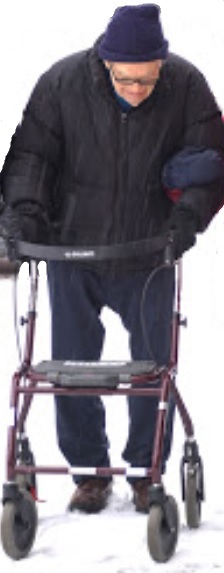
I last saw him on March 30, 2019 at the 'Say No to NATO' demonstration in downtown Ottawa during a blizzardy snowy cold day. He came out on his walker. I took pictures of Murray and briefly talked about the Big Issues of society — of disarmament and peace.

We have had a long relationship with Murray over the years. I first met him in Saskatchewan in the early1950s when Murray worked as an adult educator. We met again in the 1970s at the Grindstone Island Peace Education Centre, where Murray was one of the founders. (See his paper below.)

Despite protesting the Canadian military, Murray was decorated as an Officer of the Order of Canada in 2001, and the Pearson Medal of Peace in 1990 from the United Nations Association of Canada. He is renowned for co-founding 7 peace organizations from 1976 to 2012.

In 1982 Murray was one of the signatories with me to a UN appeal at the International Doukhobor Intergroup Symposium, Castlegar, BC, sent to the Second Special Session on Disarmament of the United Nations.

In October 2008 we published Murray’s proposal that the traditional Canadian peace groups — Doukhobors, Mennonites and Quakers — unite to stimulate an anti-NATO initiative, to promote a world without wars.

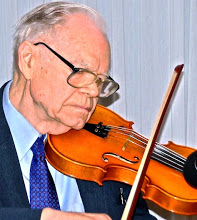
Murray indeed will be missed. He played the violin, had a great connection to people, with lots of enthusiasm and authority as well as humour. He was a renaissance man of peace — and he and his deeds need to be remembered so as to help us save our civilization from the scourge of wars.

I believe we all need to follow his example — stand up and be counted in searching and working for world peace and social justice. With the Doomsday Clock of Scientists at one minute to midnight, the need to speak out today is very urgent!

Update — On Oct 23, 2019, a 'Celebration of Life' gathering for Murray was held at the First Unitarian Church, Ottawa. I posted 63 photos. Around 200 people turned out including many peace activists, such as Ernie Regehr, Earl Turcotte, Brent Patterson, Ken Kensky Billings, Nick Aplin, Budd Hall, Edward Gertler, Dennis Gruending, Eric Memoria J. Schiller, Matt Legge, Jean Christie, Gordon Breedyk, Evelyn Voigt, Fergus Watt, Randy Weekes, Susan McMaster, Colin Stuart, Debbie Grisdale, Mary Girard, Judith Brown, and Sybil Grace. The program included a Memorial Meeting, Reception, and an evening gathering at a Westboro Pub. The Memorial brought forth many praises to the late Murray Thomson — a 'living legend' who was intellectually committed to peaceful social change in creating a world without wars.  
—  On the loss of Murray Thomson, PeaceQuest.ca,  May 17, 2019 --  'CFSC style Memorial and Celebration of Life for Murray McCheyne Thomson (19 December 1922 Honan, China – 2 May 2019 Ottawa, Canada)

By and about Murray

Fonds RC0129 - Murray Thomson fonds, 1941-2011 (Creation), Archives and Collections, McMaster University Library, Hamilton, Ontario.

In 1981 he co-founded Peace Brigades International, Wikipedia. — Inspired by Gandhi's peace army in India,

Murray Thomson. ‘The Relevance of our Testimonies to Peace’, Symposium Proceedings: International Doukhobor Intergroup Symposium. Castlegar, British Columbia, Canada, June 25-28, 1982. Pages 58-59. Koozma J. Tarasoff (Coordinator and Editor).

Murray Thomson, Ottawa Quakers active in peace work (a selection)Quaker.org. April 1995.

Murray Thomson. The Grindstone Era: Looking Back, Looking Ahead, The Canadian Quaker History Journal, No. 66, 2001, pages 12-15. — Paper given at the 2001 Annual Meeting of the CFHA

Murray ThomsonWikipedia, March 2004+

Murray Thomson. Minutes to midnight : Why more than 800 Order of Canada recipients call for nuclear disarmament (PDF). Nuclear Weapons Convention. Ottawa, ON. 2005.

Murray Thomson. ‘Toward a Culture of Peace’, Press Release from the Religious Society of Friends, Spirit Wrestlers website, 30 August 2006 — Announcement for the Gardner Lecture at the Yearly Meeting of the Society of Friends, Winnipeg, Manitoba, given by Murray: 'Toward a Culture of Peace: Can We Afford to Pay the Price?'

Koozma J. Tarasoff. Ottawa Peace Festival Provides Hope for an Ailing World : 1st Ottawa Peace Festival 2007 ReviewSpirit Wrestlers website, October 3, 2007.

Dennis Gruending. Murray Thomson says no to militarismPeace and Politics blog, October 23, 2008.

Murray Thomson. Traditional Peace Groups Explore Withdrawal from NATOSpirit Wrestlers website, October 24, 2008.

Dennis Gruending. Murray Thomson book excerpt from Pulpit and PoliticsPeace and Politics blog, November 2, 2011

Koozma J. Tarasoff. Peacemaker Murray Thomson at 90,  Spirit Wrestlers website, December 10, 2012. — Plus 108 photographs, 55 showing Murray.

Dennis Gruending. Murray Thomson Peace Activist at 90Peace and Politics blog, December 12, 2012.

Age is More : Murray Thompson’ (3.5 min video), The Revera and Reel Youth Age is More Film Project. Youtube, July 3, 2014.

Dennis Gruending. Happy warriors: Order of Canada recipients call for the elimination of nukes, Peace and Politics blog, June 18, 2015.

Walk with Us, (poster) Ottawa Peace Festival 2015. September 2015.

Nuclear war still threatens world, experts say; disarmament only solution, CBC News, May 17, 2016 — Murray Thomson has over 800 Order of Canada winners supporting disarmament in new book.

Peace activist says it's time to speak up about nuclear disarmament, BC Almanac, Episode 300249841 (22:39 min. audio), CBC Radio, May 16, 2016 — Can Canada help lead the world to nuclear disarmament? An Order of Canada winner says yes — but the people need to speak up, and the politicians need to listen.

150+ Canadians Day 151: Murray Thomson, by Jolene Simko, Peace Quest, (Internet Archive) July 2, 2017. — Refers to book: 150 Canadian Stories of Peace, 2017, with 2 stories about Thomson: 'Murray McCheyne Thomson' (page 70) and, 'Our Mahatma Walks the Walk' (page 189).

Koozma J. Tarasoff. ‘Music Against War’ versus CANSEC — May 30, 2018Spirit-Wrestlers website. June 4, 2018 — Plus 96 photos, 2 showing Murray. 

Koozma J. Tarasoff. No to NATO and War — Yes to Peace and Progress, Spirit Wrestlers blog. March 30, 2019 — Plus 40 photos, 6 showing Murray, taken in Ottawa, March 3, 2019,

Dennis Gruending. 'Peace activist Murray Thomson dies at 96'. Peace and Politics blog, May 5, 2019.

Murray Thomson, co-founder Project Ploughshares, 1922-2019 : requiescal in pace (Internet Archive), Ploughshares, May 6, 2019.

Cresky, Jim. Murray Thomson: from RCAF pilot to pacifist, The Hill Times, May. 8, 2019

On the loss of Murray Thomson …a fine fellow with a great sense of humour, PeaceQuest, May 17, 2019. — Links to 5 more articles.

Murray Thomson: Peace Warrior: Ploughshares Co-founder 1922-2019, Ploughshares, July 3, 2021.