Showing posts with label Media. Show all posts

Thursday, 29 September 2022

Human Chain for Release of Assange

By Peter Biesterfeld <docupeter@gmail.com>, journalist, @DocSchool, Toronto, Ontario. 

'Free Assange Day' to be held October 8th around the world

Gather at noon at Parliament Hill, Ottawa, in solidarity with thousands of people around the world who support Julian Assange —  Don't Extradite Assange.


Added  Oct. 21, 2022.
Assange 'Human Chain' events were held at 3 locations in Canada (2 Ontario, 1 British Columbia).

Ottawa — short video.

Toronto 8 photos

Victoria 2 photos of drum circle by Sherry Claton and friends. 

Around the world the event was promoted mostly on social media: 
and on websites:
The largest protest was in London, UK, led by wife Stella Assange and a few politicians, followed by  Melbourne, Australia.

My previous blogs about and with Peter Biesterfeld
—————
Comments: Beginning in 2024, you can only self-enter a Comment below with a 'Google Account' (gmail). This prevents irrelevant anonymous comments (spam and admail).  If you do not have a Google Account, email your Comment to KJTarasoff@gmail.com for posting.

Sunday, 6 March 2022

90 Years of Memories

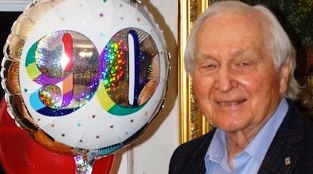
On February 19, 2022, about 60 people and I celebrated my 90th birthday ONLINE!

My wife and our daughters arranged the event which featured prerecorded video messages, phone calls, and some sent an email or letter. Thank you all.

In early February my daughter Tamara and her husband John, and Kristina with her daughter Milena, decided to arrange a virtual party. They invited many people to submit short video messages at a website, or any way the guests would like. About 60 people participated resulting in a 1.5 hour video and more than a dozen emails, cards and letters.

Kristina wanted to create a photo album of my life, and we selected about 50 photos which became a slide show presentation of my '90 Years of Memories'.

See everything here:

  • Videos submitted (1.5 hours) — Link to be added.
  • Slide show of my life — Link to be added.
  • Emails received

During the planning process, I began to reflect on my 90 years and listed these highlights of my life so far, a short version of my biography and 50 Years of Doukhobor Studies.

  1. Born in 1932 in this farm house to parents and grandparents who came from Russian Doukhobor roots. Believed that hospitality, love and nonkilling are the way to a world without wars.

  2. Met Tyrus R. Cobb world famous baseball pioneer. Invited for tryout in 1953 to Pittsburgh Pirates in California. Did not make it, but exercises that I learned from Lloyd Percival of CBC Sports College of the Air persist today 70 years later.

  3. At the University of Saskatchewan in Saskatoon, where I took my BA in Arts and Sciences in the 1950s, I produced 50 monthly journals of The Inquirer at my grandparent's attic next door, which led me to become a journalist, photographer, scholar, and peace activist.

  4. After attending the World Festival of Youth and Students in 1957 in Moscow, this led me to make 12 additional trips to the Soviet Union and Russia as a bridge-building effort between the East and the West (1957, 1964, 1980, 1991, etc, ). The wisdom of getting to know the stranger persists today as one of key steps to help the people and the planet to survive.

  5. In the early 1960s, at UBC in Vancouver, I was privileged to get my MA in Anthropology and Sociology, with my thesis on 'A Study of Russian Organizations in the Greater Vancouver Area' (PDF, 15 GB). The Cold War, I discovered, was the critical element in what brings people together and what splits them apart.

  6. In 1964, as a Russian and English speaking grad of UBC, I was invited to the International Ethnological Congress in Moscow where I met anthropologists Margaret Mead and Sol Tax.

  7. In 1980, as guest Doukhobor peacemaker and photo journalist, I reported on the Summer Olympics in Moscow as a Slavic representative for North and South America. What an awesome responsibility!

  8. Over the past 60 years I have organized a number of scholarly ethnographic studies and exchanges across North America (including a 1990 3-month North American Ethnographic Expedition with Russian scholar Svetlana Inikova), the Soviet Union and Russia on my ancestors the Doukhobors and East-West understanding. Together with my work in the provincial and federal governments as social scientists, this led me to publish over 25 books and 50 articles; the gifting to the Saskatchewan Archives and BC Archives major collections of textual materials and photographs on Doukhobors, rural development, Native Indians, and ethnography; the creation of a Spirit Wrestlers website and blog with Arizona scholar Andrei Conovaloff.

  9. In November 2007, I presented a paper on 'Tolstoy and the Doukhobors' at the First Leadership Forum in Hawaii where the Center for Global Nonkilling formed; and served as reporter and photographer for 13 Ottawa Peace Festivals.

  10. In 1982 co-organized with Community Doukhobors, the First International Intergroup Symposium of Doukhobors, Molokans, Mennonites and Quakers, held in Castlegar, British Columbia, with many prominent people including the great grandson of Lev N. Tolstoy, a major world writer and proponent of nonkilling. The meeting endorsed a letter to the UN on disarmament and getting rid of wars.

  11. With distinguished Doukhobor lawyer Peter G. Makaroff (the first non-Anglo-Saxon grad in Western Canada with a law degree in 1918), and participating Doukhobor, Quaker and Mennonite reps, in 1964 and 1965, I coordinated and helped organize four major peace manifestations in Western Canada urging the government to cease research and production of chemical and biological weapons of mass destruction, and work towards the survival of our human species.

  12. Between 1996 and 1998, served as guest co-Curator with Dr. Robert Klymasz on 'The Doukhobors: Spirit Wrestlers' exhibit at the Canadian Museum of Civilization, commemorating the centenaries of the  Doukhobor destruction of weapons in 1895 in Russia and the January 1899 arrival of the first Doukhobors to Canada.

  13. We all know that it takes a village to raise members of a family. My grandparents and parents along with my newly acquired families and offspring deserve praise for their support. Son Lev is professor at Memorial University in Newfoundland where he is modeling the last Ice Age and is searching the major parameters of climate change. Daughter Tamara, now retired as a museum professional, recently spent the last three years working in Nunavut as Project Manager, Wrecks HMS Erebus and HMS Terror National Historic Site. Their spouses, Dorothee Bienzle is an accomplished researcher and doctor, and John Pinkerton is a retired international manager for Parks Canada. Their children Jaspar and Katya along with Tamara and John's offspring (Nicholas and Elena) are outstanding students, athletes and outdoors people like their parents. I always marvel at being so lucky to be part of their family circle. 

  14. As well, I marvel at the challenge of keeping alive my 30-year marriage with Kristina Kristova, a pioneering journalist who once served for 24 years as anchor person with the Bulgarian National Television. Her daughter Milena is a music teacher in Ottawa, while son Orlin is in Sofia, Bulgaria, as a professional keyboard composer / musician. Kristina introduced me to her most fascinating Bulgarian community who have given me the title of 'Honourary Member' although I have not learned much Bulgarian language.

  15. In the 90 years of my life, this family along with all the people that I have met around the world (in person, in books and in the media), I consider all of you remarkable and many are friends and wisdom people. Bolshoe spasibo! Thank you very much! You have taught me so much. I wish all of you to live at least to 90 with good health, joy, peace and happiness.

  16. Personally, I look forward to many more years of productive life. In my work, I never got rich in money, but rich in ideas, in friendship, and in the vision of my ancestors for a peaceful world without wars.

Tuesday, 20 April 2021

YouTube misspelled "Doukhobor" 68 times

The word Doukhobor was misspelled 35 ways and 68 times in the YouTube closed captions for the USCC Union of Youth video: Peace and Sustainability: How Doukhobor history, culture, and community connects to the Sustainable Development Goals, (22 minutes, March 5, 2021).

NOTE (June 13, 2021) This video was recently taken offline, and is not now listed on the USSC Union of Youth video channel.    

22 other captioned words were also misspelled, and 2 historical mistakes were stated, totaling 92 errors.

For example, in this screenshot from minute 1:30 of the video, Doukhobor is misspelled twice in one sentence.

Correct caption: "I personally identify
as a Doukhobor, and to my knowledge, I'm
a fifth generation Doukhobor Canadian."

Closed captioning “fails” are misspellings of spoken words created by automatic voice-to-text software. These are different errors than the more than 50 ways Doukhobor was misspelled in print by people.

A total of 23 words were misspelled in the online Closed Captioning, and the time-stamped Transcript. The most obvious was how Doukhobor was misspelled 68 times, 35 different ways, never correctly. This means that disabled people probably will not understand the CC text, and anyone searching the closed caption text for the word Doukhobor will not find it.

22 other words also failed to caption correctly. Many are amusing, some phonetically spelled like Dukhoborese. 

To project a serious public image, the captions must be corrected. See links at bottom.

2 Factual Errors Appeared

These corrections were posted in the video Comments, without the links below to the references, because YouTube forbids outside links.

Count 35 different spellings of Doukhobor 68 times in YouTube “Closed Captions”.

Multiple Times (count 49)      Once Each (count 19)
 7  dukabor(s)
 6  duke aboard(s)
 4  dukabours
 4  dukeboard(s)
 4  dukeboro(s)
 3  duke of war(s)
 3  dukeboys
 2  dukabur
 2  duke abroad
 2  duca boys
 2  duke boys
dubois
duca boards
duca boars
ducaborgs
ducavores
duchaboretz     
dukabourg
duke bars
duke boards
duke boars
duke boris
duke of
duke of our
dukeborg
dukeborism
dukelbores
drugs
duplicator
jukeboards

Update: In May 2023 I watched "A Friend at the Door", National Film Board of Canada, 1950, in which Doukhobor was misspelled in Closed Caption as: "dab boards" and "dbo". 

In the 22 minute narration, words were slightly slurred differently, especially Doukhobor. Most of the captions recognized the d, u, k, b, o, r, and s, but scrambled other letters and inserted spaces. As the clarity of voice varied, 6 repeated words (*) were captioned correctly and incorrectly.

22 Other Words
  Spoken   
    alike
    Castlegar*
    Castlegar's
    college*
    Covid-19*
    doms
    Ewashen
    ferries
    Kalmakoff
    Kootenay(s)
    Ktunaxa
    Mir*
    Perehudoff
    Selkirk*
    Sinixt
    spasibo
    Tsar
    Tsilhqot'in (Chilcotin)
    USCC*
    Uteshenaya (Ootischenia)   
Captioned
  a lake
  kasugar
  kassagar's
  call illegal
  kovid 19
  dorms
  awashin
  fairies
  kamikov
  kootenai(s)
  tanaha
  mere
  Pero-hudoff
  soccer
  silks
  spaceba
  sarah
  chiquetmic
  ufcc
  udeshenya
* 6 words spelled correct and incorrect, depending on voice clarity.

The only solution is to edit your own YouTube video captions.

Saturday, 9 January 2021

Defunding the Myths and Cults of Cold War Canada, by Richard Sanders

I met Richard Sanders about 40 years ago at a peace rally in Ottawa, and we remained friends. Like me, he opposed war, attended rallies, and studied anthropology. He founded the Coalition Against Arms Trade (COAT) and maintains the website which I read. He aims to educate us how the roots of war are perpetuated today.

Click to ENLARGE
Richard Sanders illustrated himself.


Richard says: ‘In this 64-page exposé (with 600+ footnotes) I have documented the 70-year history of collaboration of the Canadian government (and the corporate media) with pro-NATO, East European émigré groups that killed millions of innocent people.

I show that the ethno-nationalist cult founders, leaders and heroes include: 

Almost half of my report is now available online


To receive a free sample copy of Press for Conversion in the mail, send your street address in Canada to: overcoat@rogers.com, or in Facebook

Wednesday, 6 November 2019

A Quaker Summary of Fighting

Book review.
  • Are you worried about increasing hate crimes?
  • Does it feel like our world is becoming more divided?
  • Do you care about peace?
In 2017 the Peace Program Coordinator and Communications Coordinator for the Canadian Friends Service Committee (Quakers) proposed to answer these questions scientifically by conducting a peace literature review and bibliography. He originally planned to compile a 50-page report to summarize:
  • What does science reveal about achieving interpersonal peace, avoiding conflict and hatred?
  • Do we really need to fight?
The short project continued for 2 years, and grew to 327 pages. To include as much as possible into the book, the font size was reduced, yet much had to be omitted. Perhaps a second volume will be published to compile the rest of their research.


Matthew Legge. Are We Done Fighting? Building Understanding in a World of Hate and Division (New Society Publishers, Gabriola Island, BC, 2019): 327 pp. Copyright by Canadian Friends Service Committee (CFSC, Facebook).

I read the book with much interest and then attended a book launch by the author on October 23th, 2019 at the Friends’ Meeting House, Ottawa, Ontario. Some 30 people attended. A question-answer period followed.

The event was audio recorded by Ken ‘Kensky’ Billings, and posted for you on pCloud, linked from his Digileak Canada website:
Matthew Legge (pronounced: ‘Le-ZHAY’) has been on a book tour across Canada, speaking on radio, at universities, bookstores, and Friends Meeting Houses; and teaching a few workshops. See schedule at bottom of AreWeDoneFighting.com. This is his first presentation fully recorded and posted online.


My Review

This book is a 2-year cooperative effort of many people: the author Matthew Legge — an anthropology graduate from the University of Toronto — and his staff at the Quaker Centre in Toronto.

Matthew emailed to me:
‘The book has about 750 end notes that made it into the final copy. I can't say how many hundreds of books and studies I read, many hundreds did not make it into the book. I didn't do 100% of the research myself. 2 other staff and volunteers did parts and sent me things.’
The book is mostly a literature review of many sources related to avoiding violence — 'Evidence and techniques you can use right now'. The research team examined publications in psychology, anthropology and sociology of peace, mostly focusing on cultural ‘interpersonal peace issues’, not inter-government politics.

The author presents many tips for avoiding personal conflict and misunderstandings in daily living, but little about preventing WW3. The intent was to examine what is known about ‘hate and division’ in society. A very challenging aspect of war prevention!

In 24 short chapters, each ending with helpful tips, the author attempts to reach people with different educational, political, religious and cultural backgrounds. The result is a comprehensive text with many insights into the fundamental issues of hate and division, without a guarantee of what will work or not work. Although very useful as an academic study, in my opinion it fails to be a practical guide to action.


Positives

Gems I found especially useful and noteworthy:
  1. Equality is a useful ingredient in respecting people and countries. Trying to be overly superior to others will not lead us to a peaceful world. We need to acknowledge that we are all part of one world community and need to work together to survive.
  2. The understanding of ‘power over’ and ‘power-from-within’ are useful concepts in avoiding exploitation and violence (pages 23-24). Working together for a ‘win-win’ outcome would also help. 
  3. ‘....The peace virus can demand patience and perseverance, and the way we live it out makes a difference to the results we get’ (page 49). Peace virus is transmitted to children through modelling (page 126). Parents and teachers, please take note and be a model for living.
  4. The ‘creative power of silence’ can be used to begin a meeting (page 44), as is done effectively in many Quaker meetings. This is mindfulness at work.
  5. Among the communication skills, try communication instead of changing someone’s beliefs by shooting down our opponent (page. 56). Recognize, acknowledge, and even respect other views. Work together on common ground issues such as climate change, disarmament, etc.
  6. Emotions are contagious — treat them with care (p. 84). We can all be manipulated towards goodness or violence. Psychologists tell us that our interdependence and malleability shapes what we think and do. Beware of psychological warfare (page 79).
  7. Effective communication involves shared values of rapport building, careful listening and observing, and seeking truths (page 94). Take note of body language. Use humour when appropriate, but avoid humiliation (page 90).
  8. War ‘is not natural’ (page 124), but is a learned behaviour. It follows that we can learn to create a peaceful world.
  9. There is a problem today with mainstream media where the bias is towards sensationalism, such as the bomb. How about seeking good news stories?
  10. Establishing Ministries of Peace around the world is ‘an intriguing idea for improving the capacity and will to engage in prevention’ (page 228).

Negatives

The 327 pages of fine print, of which 52 pages are end-notes and index with even finer print makes it very difficult to read.

Though over 1,000 books and articles are listed, many important items for peacemaking familiar to me were not listed. It appears that the author and his team did not look at my website and blog which are full of valuable aides for peacemaking. I suggest adding these 7 missing items/topics.
  1. The Center for Citizen Initiatives in California has escorted groups of “citizen diplomats” (mostly Americans) to Russia since 1984 to engage in personal dialog. President Sharon Tennison has visited Russia for 35 years and rejects the war propaganda. “Misunderstandings, fallacious accusations, flare ups and demonizing ... we see the need and possibility for changing this situation. When real people in large numbers get involved, amazing things begin to happen. Join us!” Next trip: June 2020.
  2. In June 1895 my ancestors burnt their guns as a public resolve to get rid of wars. The war / peace issue is very much part of the Doukhobor movement, and I continue to be part of that movement to create a world without wars. Since the 1950s, I have been working steadily on a study of Spirit Wrestlers / Doukhobors with connections to the wider peace movement. A dozen books have been published and countless articles are in print and many more are steadily being produced in my Spirit-Wrestlers website and blog.
  3. 'A Study of Russian Organizations in the Greater Vancouver Area', 1963, my MA thesis in anthropology and sociology. During the first Cold War, I attended the University of British Columbia and studied the issues of what brings people together and what splits them apart. I found that both hot and cold wars split societies apart and cause undue suffering to humanity. If   we are to achieve a sustainable nonkilling society, this means we urgently need to get rid of the ‘scourge of war’ and make war a crime against humanity!
  4. ‘Opening Doors For Survival: A Handbook on Soviet-West Initiatives’, 1986. I produced this unpublished practical manuscript which was expanded and published in very limited numbers in 1991 by Peace Train Foundation in Ottawa, Canada as Discovering Soviet-West Cooperation. A Handbook on Soviet-West Bridge-Building Initiatives. The insights into peace-making are as valid today as they were in the 1980s.
  5. 'Doukhobor — Quaker Connections : Talk with Young Friends in Ottawa', December 6, 2009 Presentation Outline, Comments (updated 2019). Includes useful suggestions of what young Friends can do to make a contribution to society. The article also includes the story of effective peace manifestations  in Western Canada in the 1960s involving Doukhobors, Quakers, Mennonites, Fellowship of Reconciliation, and other groups. 
  6. Dr. Glenn D. Paige’s book Nonkilling Global Political Science, (2002), advanced the thesis that it is possible for humans to stop killing each other. The thesis supports the conclusion of the World Report on Violence and Health (Geneva, 2002) that human violence is a ‘preventable disease’. In November 2007, Dr. Page organized the First Global Nonkilling Leadership Forum, Hawaii, at which I presented my paper: ‘Tolstoy and the Doukhobors’. Wisdom people from around the world united to create a Nonkilling Society. The forum launched the Centre for Global Nonkilling ‘to promote change for a killing-free society’. While killing is deeply entrenched in world culture, it is not universal. Nonkilling is a new paradigm for a brave new world. The wider peace community should take note.
  7. 150 Canadian Stories for Peace — An Anthology, 2017. One of my contributions here was 'Opening Doors for Survival during the Cold War' (pages 101-102). In 1984-1985 I held 17 living room discussions on East-West bridge-building. My article concludes: ’With fake news in today’s Cold War world, are we not repeating again the dangerous lies about our northern Russian neighbours and others? When will we ever learn?’

Contact the author Matthew Legge at Canadian Friends Service Committee (CFSC, Quakers), 60 Lowther Avenue, Toronto, Ontario M5R 1C7, Canada. Phone: 416-920-5213 Web: quakerservice.ca. Facebook/Twitter/Instagram: @CFSCQuakers. Get a free chapter of CFSC's book at: AreWeDoneFighting.com


More reviews

Enter your comment below.
For help, see 'Blog comment instructions'.
If you use the Safari browser on a MacIntosh computer, sorry, you cannot enter a comment.

Saturday, 24 June 2017

Books and Videos about Russia

While writing my Book Review: Romanov, Introduction to Canadian Studies, I wished that such a book existed about Russia that was as interesting and fair as Dr. Romanov had written about Canada. So we began searching for such a book. In the meantime the Oliver Stone documentary about Putin appeared.

My recommendations for books and videos about Russia

Russia: A Reading Guide', Center on Global Interests (CGI), August 30, 2016
— 12 experts share the 50 books that shaped their understanding of Russia. Only one book is mentioned by two people.

Richardson, Paul E. & Mikhail Mondasov. The Spine of Russia, July 2016, 200 pages.
— In the Fall of 2015, a Russian and American journalist travelled 6,000 kilometers from Russia’s northwestern corner in the Arctic to Sochi, in the tropical climes of the Black Sea. The group tells the stories of Russians whose life and work is taking the country forward, and what they feel patriotic about, what is important to them.

Stone, Oliver. (book) The Putin Interviews: Oliver Stone Interviews Vladimir Putin, Skyhorse Publishing Inc, June 16, 2017, 288 pages. — Transcripts of all 20 hours from video.

Stone, Oliver. (video) ‘The Putin Interviews’, (4 hours total video) Showtime cable TV, June 12-15, 2017.

More books about Russia

To be fair to my list of books above, I include lists below recommended by journalists. I feel that many (not all) of these books are biased, because they seem to be limited in scope, often stuck in a paradigm of one ‘super policeman state’ rather than respecting wider regional players.

Basulto, Dominic. 'The 7 Best Books of Summer 2016 for the Avid Russia Watcher', Medium, June 16, 2016. — Former columnist for The Washington Post’s “Innovations”

Begley, Sarah. '9 Books That Can Help You Understand Russia Right Now', Time magazine, February 15, 2017.

Elkin, Dimitri. 'Top 10 books on Russia in 2016', Russia Direct, December 30, 2016. — The best books of 2016 include those that take a closer look at U.S.-Russia relations during the Cold War and perestroika, enabling readers to better understand the current Putin era.

Honig, Michael. 'Top 10 books on Vladimir Putin's Russia', The Guardian, April 20, 2016.

Lebedev, Sergei. '10 Books That Explain Russia Today', Publishers Weekly, February 19, 2016 — Lebedev, who was born in Moscow in 1981, picks 10 books that explain Russia's complicated past and present.

Weafer, Chris. 'Six ‘must-read’ books on Russia from last 25 years', Johnson's Russia List, September 10, 2015.

'The Top 10 Summer Books for Russia Watchers', The Moscow Times, July 2, 2015.

Readers:  Enter your recommendations in Comments, below.

Monday, 6 June 2016

Will Business Start a War With Russia?

STOP, DANGEROUS FOR LIFE
A few days ago I read this article: Warning! Neocons Are Close To Starting a Nuclear War With Russia, Dmitry Orlov in Russian Insider, June 1, 2016.

Neocons is short for neoconservativism, a political term coined in 1973 to label politicians who hire big businesses to fight communism and conduct wars so the US can police the world.

Here’s what I think and want to add to simplify the article:

Trust — Russia can no longer trust most of the American-managed rhetoric of so-called democracy, superiority, justice and truth. The US dominated NATO lied to Russia in the early 1990s when it promised not to advance towards Russia. The US now encircles Western Russia and is a threat to its security.

Media — The Western media takes every opportunity to demonize Russia and President Putin. That is not honest journalism, but a takeover by western corporate interests. The West must acknowledge that the
USSR won World War II, with 27 million deaths and defeating fascism. 90% do know know this fact.

More dangerous signs:
What is needed is a major change of orientation by the West from war thinking to peace, from extreme capitalism to a form of democratic socialism, working together instead of fighting each other. Hopefully we in the West will wake up and help our people to change the orientation towards a more respectful relationship with other members of the human family.

You see how complicated and dangerous the world is today.

US Superpower — The United States (US) insists in remaining the world's superpower. It has over 1,000 military bases around the world, a CIA, Pentagon, many NGOs, and a media too often spreading propaganda and lies. But other countries have legitimate interests. The superpower model should be replaced by regionalism and equality of nations.

Huge budget — The US annually spends US $1.7 trillion on its military, because big business needs to profit from war and government needs to perpetuate the notion of a superpower, and regime changer if necessary. More spending should go to social services, infrastructure, etc.

Problems — The US is facing formidable problems not well known or understood.
  • Its economy is in bad shape (debt to China is $1.24 trillion, January 2015).
  • It has the largest prison population in the world, 2.2 million, and many work like slaves for private companies.
  • Its deteriorating physical infrastructure such as railroads and bridges is horrendous.
  • Gun violence is endemic with more private weapons than any country; 32,000 people killed yearly with guns.
  • Many lack adequate health care.
  • Public education is often narrow and expensive.
And we can go on. The American Empire is on the way to collapse within a decade or two unless drastic changes are made.

Extreme capitalism is doomed. Profit at any costs (even war) cannot be sustained. The rich cannot maintain gross inequality. Too much money for a small portion of the top 1% disrespects the worth of the wider humanity. A cooperative sharing relationship is urgently needed.

See next blog: Canada — Stop Aggression Abroad !, 19 June 2016.

Saturday, 14 May 2016

Letter to Editor Ottawa Citiizen

Ottawa Citizen     Homepage
Page A7 : Your letters for Friday, May 13

Two world events ignored by western news media.

I am appalled that the Ottawa Citizen and other western media have generally ignored or downplayed two international humanitarian cultural events: one in the ancient city of Palmyra on the occasion of Martyrs’ Day in Syria, and the second at Victory Day in Russia.

The first event brought the famous St. Petersburg Mariinsky Theatre Orchestra, headed by Maestro Valery Gergiev, to Palmyra, six weeks after ISIL was forced out, as a celebration and in gratitude to all those who fight terrorism and sacrifice their lives.

The second event, May 9 in Moscow, commemorated 71 years since the defeat of Nazi forces and the memory of Second World War veterans. The Soviet Union lost 27 million people in defence of the country and of freedom for the world. More than 40 countries took part in this memorial, which attracted 800,000 participants to the Moscow parade.

Koozma J. Tarasoff, Ottawa


Martyrs’ Day

May 6, 2016, was the 100th anniversary of a massacre in Damascus and Beirut, Syria by Ottoman military leader Jamal Pasha 'The Butcher'. Russia ordered a cease-fire, and sent an orchestra to participate in the Syrian memorial for the dead. Concert title: 'Pray for Palmyra. Music revives ancient remains'.

Victory Day

(Russian: Den' Pobedy) honors veteran dead relatives as an 'Immortal regiment' (Russian: Bessmertnyi Polk). Photos of dead veteran relatives are carried by mourners. In 2016, citizen video journalists documented 3 memorial parades in Canada.

Toronto
Calgary
Winnipeg

Tuesday, 1 September 2015

It is criminal how the West is maligning Russia and Putin

By Alex Ewashen. August 4, 2015

Alex Ewashen
On June 27th on the Doukhobor Heritage Tour 2015 to Turkey, Georgia, Azerbaijan and Russia, to seek out our forefather’s ancestral roots, Brian and I set out on an experience of a lifetime, we returned on July 20th. These countries mentioned were all a part of Russia when our ancestors migrated to Canada in 1899. The heritage tour is a wondrous story, but that will come at a later day.

It is another world out there which our media tells us nothing about, but to strike right at the bone, it is criminal how the West is maligning Russia and Putin. In our travels through villages, towns, country sides and the streets of cities we found that Putin was well respected and admired, and that Moscow was the centre of that part of the universe. Besides being a very popular tourist destination, (one of the most expensive cities in the world) people from Turkey, Georgia, Azerbaijan and of course Russia go to Moscow to work, they work 20 days there and come home for 10.

There are huge cranes everywhere, from the Kremlin to the outskirts of the city, and streets are being dug up to up grade the infrastructure. In our travels we came into Moscow from two different directions and there are new four and six lane highways leading into the city. The streets of Moscow are clogged with BMW's, Audi's, Mercedes, Volvo's, Cadillacs, and every other American and Japanese cars. Men in silk suits and shinny brief cases hurry by on the streets, too preoccupied, or on iPhones, to give you a glance or a smile. I could have spent my entire time sitting on the street photographing the different ladies foot ware, toenails painted to match their shoes and handbags.

And what about the West’s embargo and sanctions? Well, it seems as far as technology and big business, like KFC, Burger King, and McDonald’s, and the car industry are exempt. It is business as usual. The ordinary man in Russia welcomes the embargo. People were getting upset about the many imports, and Russia has geared up very fast to becoming self sufficient developing their own industries. A young couple we stayed with in a village were into making cheeses and selling cream, butter and milk. Their produce had gone up in price by 60 to 75% since the embargo. A lady running a souvenir kiosk, said: 'Look at my stock, it is all made in Russia now'.

On the other hand while visiting in Georgia, which is under US dominance, the general populace is very upset about the embargo. Georgia has a centuries old wine industry, because they are forced to take part in the embargo, they cannot sell their wine to Russia, who was their biggest customer. Georgia grows tons of watermelon which they used to sell to Russia, this market is no more, so the agricultural producers are really hurting.

Saudi Arabia, the US’s foremost ally in that part of the world, is investing 10 billion US in the next five years, largely in the Russian economy, targeting infrastructure, agriculture, medicine, and logistics. Putin’s goal is to make Russia 100% self-sufficient in it’s food industry within the next 10 years.

The biggest thing happening to demonstrate the futility of Western efforts to isolate Russia is a summit underway between Brazil, Russia, India, China and South Africa to establish a new development bank, BRICS, and emergency currency reserve pool, each to be armed with $100 Billion, to rival the World Bank and International Monetary Fund (IMF) .

Russians are very conscious about their diet. A bill has been submitted to restrict advertising of food high in sugar, salt, fat and saturated fat. If passed, the bill would ban fast-food advertisements aimed at Russian youth and would require that any advertising of these products be accompanied by a health warning. The law would also prohibit fast food advertisements within 100 metres of gyms, medical clinics, military buildings, cultural venues libraries and schools.

Our trip was an experience of a lifetime, and a real eye opener….


More
  1. Alex Ewashen. Rags To Riches…My Way. July 8, 2015. Book Review by Koozma.J. Tarasoff.
  2. Natylie Baldwin and Kermit Heartsong. Ukraine: Zbig's Grand Chessboard & How the West Was Checkmated. Next Revelation Press, San Francisco and Montreal, 2015.
  3. Corinne Seminoff. 'Back to the Motherlnd - Remaking Russian Farms in Times of Crisis.'
  4. Ekaterina Blinova. From 1945 - 49 the US and UK Planned to Bomb Russia into the Stone Age.  Russia Insider, September 4, 2015. 

Wednesday, 19 November 2014

Return of ‘4 gods-within us’

In December 2013, four friends, kindred souls, met together for coffee in downtown Ottawa, resulting in a blog ‘4 For Coffee: a meeting of 4 gods-within us’. Today, November 18th, 2014, the four of us met again with new insights into human behaviour from the personal to the world order. See all my meeting reports.


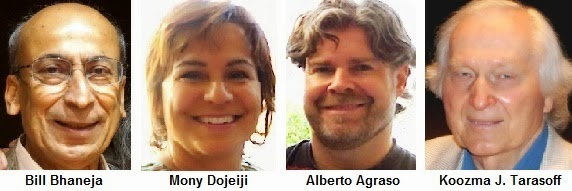
We 4 are: Bill Bhaneja, a retired political scientist, Ottawa, playwright and author of Quest for Gandhi — A Nonkilling Journey (2010), and Troubled Pilgrimage: Passage to Pakistan (2013); Mony Dojeiji and Alberto Agraso, co-authors of Walking for Peace — an inner journey (2013), and I Am Happy (2013); and me, Koozma J. Tarasoff.

The common ground of the four ‘gods-within us’ is the spirit of love that permeates our lives and gives us meaning as individuals and as a human species. This spirit within gives us optimism to act as Gods within the confines of a friendly planet. Our intention is to act with passion, but equally to be socially responsible for our actions.

Highlights of what we discussed for 2 hours:
  • Mildred L. NormanPeace Pilgrim (1908-1981), who walked 25,000 miles for peace from 1953 to 1981, spoke about peace among nations, groups, individuals, and the very important inner peace — because that is where peace begins. Her life and work showed that one person with inner peace can make a significant contribution to world peace.
         Both the inner and outer voice were affected by whether we were driven by ego or by our conscience. She said that she began to realize that it was as though we had two selves or two natures or two wills with two different viewpoints. Because the viewpoints were so different, there was a struggle in our lives between the two selves; ultimately it took her 15 years to understand the real meaning of life. It was a challenge and a treat to observe and act from an egoless viewpoint.
         In her search for meaning in life, Peace Pilgrim expressed a need to deal with the world situation today. ‘… Certainly all present wars must cease. Obviously, we need to find a way to lay down our arms together. We need to set up mechanisms to avoid physical violence in a world where psychological violence still exists. All nations need to give up one right to the United Nations — the right to make war….We need a Peace Department in our national government to do extensive research on peaceful ways of resolving conflicts. Then we can ask other countries to create similar departments’ (Steps Toward Inner Peace, pages 31-32).
  • Gandhi — We explored the question of how inner peace could be achieved. Mahatma Gandhi in An Autobiography: The Story of my Experiments with Truth, worked towards two spiritual principles to attain inner peace — this is similar to what Peace Pilgrim sought. Gandhi describes these principles as Aparigraha (non-possession) (An Autobiography.., page 276) and Sambhava (equability). (Bhaneja, Quest for Gandhi, pages 101, 104, 105.) Once you work towards those principles you start understanding the meaning of following Vedantic prayer for inner peace:
               O'Lord lead me from Distinction to Distinctionlessness;
               O'Lord lead me from Ego to Egolessness;
               O'Lord lead me from Desire to Desirelessness.
    This understanding leads us to the notion that we are children of the same God, the same common humanity, and the same divine. We also start understanding Gandhi's message that there is no 'other', no enemy. Gandhi used to remark: 'Hate the Sin, not the Sinner' (Bhaneja, Quest for Gandhi, page105.).
  • Brotherhood — Real citizenship ought to embrace the world. We are all members of the human family. This means that Stephen Harper (Prime Minister of Canada) is as much a brother as is Vladimir Putin (President of the Russian Federation). Members of ISIS are our brothers, too, even though we do not support their violent behaviour. When we label and dehumanize these individuals, it becomes difficult to see them as capable of change, of thinking and acting in different ways. Our anger or frustration at their actions can influence our capacity to see them as human beings too. 
  • Propaganda — Politics on the other hand has been driven by power and control where ego gets an upper hand over conscience; when noble ideals and human rights enshrined in Constitutions are often violated and compromised especially for economic gain. Historically fear and labeling have been used as one of many techniques of propaganda for crowd control. Politicians have often used these mechanisms underhandedly as a way to hijack the population without respecting the rights of citizens to share their legitimate ideas. Let’s be careful how we use the word ‘terrorism’. As well, we need to be aware of corporate groups such as ISIS (the so-called 'Islamic State') which spreads fear designed to hijack vulnerable populations for their own purposes. The same happens even in democracies, where fear is used to create division among the populace and hence justify actions.
  • War — During the Nuremberg trial after WWII, Hermann Goering, Hitler's second in command, said in his cell to the prison psychologist:
         ‘Why, of course, the people don't want war. Why would some poor slob on a farm want to risk his life in a war when the best that he can get out of it is to come back to his farm in one piece. Naturally the common people don't want war: Neither in Russia, nor in England, nor for that matter in Germany. That is understood. But, after all, it is the leaders of the country who determine the policy and it is always a simple matter to drag the people along, whether it is a democracy, or a fascist dictatorship, or a parliament, or a communist dictatorship. Voice or no voice, the people can always be brought to the bidding of the leaders. That is easy. All you have to do is tell them they are being attacked, and denounce the peacemakers for lack of patriotism and exposing the country to danger. It works the same in any country’ (Bold added). (Gilbert, G.M. Nuremberg Diary, 1995: 278).
  • Truth — Words used carefully can become so powerful that they literally fly around the world and influence social policy. What do such words as the following mean: ‘democracy’, ‘peace’, ‘nonviolence’, ‘nonkilling’, ‘spirituality’, and ‘compassionate city’? But when these and other words become mere labels, become routinized and institutionalized, they can betray us and lose the original meaning. Remember that the first casualty of war is information. Journalists should strive for accuracy and avoid spreading untruths.
  • Our Behaviour — Wisdom people such as Aristotle have urged us that there needs to be a balance between the head and the heart. This is what conscience is about. Ultimately, it is our behaviour that makes the difference. Or as my Doukhobor ancestors used to say: Бог да Бог, но ты не буть плох (You can speak all you like about God, but behave yourself. Literally: God yes God, but don’t you be bad.).
References

Monday, 3 November 2014

Next Book Presented

Why I Wrote My Book on Spirit Wrestlers / Doukhobors? was my presentation to 39 people at ‘Arts Night’ in Ottawa on Friday evening October 31st, 2014.

The event was a monthly public educational meeting organized by a local artist for guest artists in literature, visual and music. I was the first of three speakers, each given up to half an hour to present and answer questions. It was a fun and educational experience with a diverse group.


I used my time to educate the audience about Doukhobors, talk about my last book and the next book in-progress — Spirit-Wrestlers: Doukhobor Pioneers and their Friends (2016).

I was pleased that most of the audience had heard of Doukhobors, and three gave rather accurate descriptions. I wanted to deliver what I thought were the most important aspects of the Doukhobor movement before I talked about writing. To save time, I prepared a one-page handout.

I wrote the book for 3 reasons:
  • biographies — our people
  • misinformation — misconceptions, myths
  • posterity — next generations
I gave summaries of 5 Doukhobors as sample biographies from my 2002 book and the update book in-progress.
  • Peter Oglow (1913 - 2004)
  • Nick Troubetzkoy
  • Kim Kanigan
  • Jim Deacove
  • Elaine and Alfred Podovinikoff
Then I covered two misconceptions, and finished with a case for nurturing and educating our children towards a nonkilling society. We had time for 7 questions, added to the end of my text.

Read the text of my presentation and questions, and click on the images to see what was projected on the large screen. At the end is the handout. And here are 21 photos of this Arts Night.

Saturday, 6 September 2014

Q62: Doukhobor hood credited to KKK?

From: Keith Tarasoff, Canora, Saskatchewan, August 20, 2014

In the Thursday August 14, 2014 issue of the Kamsack Times on page 13, there is an article : ‘Discovery of unusual hooded garment at Pelly museum leads to research of Ku Klux Klan activities in Saskatchewan.’

To my knowledge this garment was worn by Doukhobors to keep warm, and had nothing to do with the type of hood garment worn by the KKK.

As we at the National Doukhobor Heritage Village in Verigin, Saskatchewan, believe the article was written with a reference in error to the real truth. We want to set the record straight. We are asking for your reaction to the article. Any insight would be helpful.

Answer

You are correct Keith. The newspaper shows a Russian hood, called bashlyk (башлык), made by our Doukhobor ancestors. These were common in Imperial Russia.

Maureen Stefaniuk, the museum’s summer attendant, should retract any connection between their display and Ku Klux Klan in Saskatchewan. Canadians have been falsely selling Freedomites as Doukhobors for more than a century, now they are falsely displaying a Doukhobor garment as KKK.

Here are comparisons of 3 Russian-made bashliki with one of current fashion.

  1. Fort Pelly-Livingstone Museum exhibit, published in Kamsack Times.
  2. Photo of a Doukhobor bashlyk by William Perehudoff, 'Costumes and Handicrafts in Color,'Pictorial History of the Doukhobors (1969), page 253.
  3. Photo of bashlyk displayed online at National Sholokhov Museum-Reserve, Veshenskaya, Rostov Region, Russian Federation.
  4. Typical hood-hat-scarf-gloves garment sold online and in many stores.
Fur trapper hats are somewhat similar and more common.

Doukhobor bashlyki are on display at the Doukhobor Discovery Centre in Castlegar, British Columbia; and at the National Doukhobor Heritage Village in Verigin, Saskatchewan. The Fort Pelly-Livingstone Museum can confirm their garment with these 2 museums.

Russian websites show many examples and instructions for making them. Modern English names and styles for this scarf-hat-hood garment vary. Many have animal heads and ears. Sometimes they are mislabeled “snood” — a hair net, which is not a contraction of “scarf-hood.”

Among non-Doukhobor Spiritual Christians from Russia in the USA (Dukh-i-zhizniki, Molokane), their women's' head covering for religious meetings which they call kosinka (triangle), evolved from a scarf of solid fabric to lace cut in a snood-style pattern.

More: Questions and Answers, Comments

Tuesday, 17 June 2014

Selling Freedomites as Doukhobors
     is False Advertising

Two events promoted in Nelson, British Columbia, have been fraudulently selling Freedomites (Svobodninki, Sons of Freedom) as Doukhobors — a movie and museum exhibit. Both events were promoted in the Nelson Star newspaper.

Canada has laws against consumer fraud, false advertising, counterfeit goods, bait-and-switch, identity theft, mislabeling, adulterated food, etc. Consumers want to be protected against deception, counterfeit products to be confiscated, defective products repaired or exchanged, businesses licensed and inspected, and perpetrators arrested.

If 'Doukhobor' was a trademarked commercial product, it would be a crime to promote the 'Doukhobor' label to the public, collect money but deliver something else. After more than half a century of public awareness education, this fraud is still happening in Canada because the word falsely lingers as a profitable commodity of sensationalized abuse, arson, bombings, nudity and terrorism.


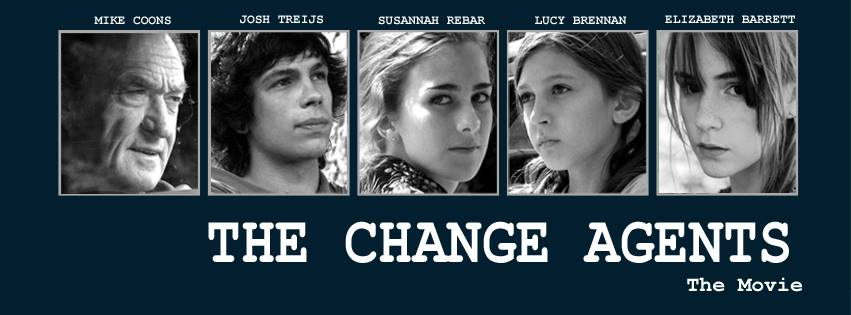
Movie: The Change Agents (2012)

In mid-April 2014, Alex Atamanenko (Member of Parliament) gave Tarasoff a DVD copy of a movie to review which was produced by staff and students of L.V. Rogers Secondary School in Nelson, BC. Atamanenko saw it and wanted Tarasoff to comment. The movie shocked us. It’s been in the Kootenay news since October 2010. Why did no one tell us about it? Why was it not mentioned in the USCC Doukhobor monthly magazine Iskra? *

The opening minutes show 6 photos of Freedomites taken in the 1950s, 2 with nudity and fire, while the narration falsely states they are Doukhobors, pacifist spirit-wrestlers. Next, student actors joke about nude protests, arson and bombing; while their teacher discusses the Son of Freedom nude protests as examples of social activism.

While the movie promotes cleaning the environment, it pollutes the public perception of Doukhobors. The words ‘Doukhobor’ and ‘spirit-wrestler’ must be deleted from the movie and never be used to describe extremist actions of Freedomites (Russian: Svobodniki: also: Sons of Freedom).

Tarasoff complained to the movie owner/producers and writer about correcting this fraud. So far some have acknowledged the errors, but the current movie owner has not made the corrections. (See: Ottawa Screening of 'The Change Agents')

Photo Exhibit: Touchstones Nelson Museum of Art and History (2014)

On June 10, 2014, the Nelson Star website posted ‘Examining the Sons of Freedom’ about an exhibit of photos from the 1950s and 1960s at the Touchstones Nelson Museum of Art and History, promoted with a photo of the current Doukhobor choir “Friends.” Tarasoff responded with an open letter to the paper and museum to correct two errors.

Your story implies that “Sons of Freedom” are “Doukhobors”. They are not the same! The story stated that ‘the photographs in this exhibit document a compelling chapter in the history of the Sons of Freedom Doukhobors, as well as our community.’ To avoid stereotyping and discrimination, the word “Doukhobor” should not appear in this story, nor should it be used as a synonym.’ The exhibit title should be: ‘Sons of Freedom: Photographs from the Stevens Studio,

The original Russian term used by these separatists was Svobodniki (sovereign people), later called Freedomites, and by the 1920s journalists called them "Sons of Freedom" (Russian: Syny svobody).

Photos of Freedomites in the movie were obtained from the museum collection, online at Touchstones Nelson, flickr. Neither the newspaper nor the museum have responded.

Go to Court

Though the movie and photos don't directly refer to the USCC Doukhobors, the Council of Doukhobors in Canada (CDC), the Canadian Doukhobors Society (CDS), or the Doukhobor Society of Saskatoon (DSS); the intention to deceive the public about Doukhobors for profit and gain is obvious.

With no remorse, the paper promotes organizations which stigmatize Doukhobors with a powerfully negative label that changes their self-concept and social identity.

The only possible legal defense for such fraud is claiming that no entity owns the generic 'Doukhobor' label, therefore anyone is free to use it, abuse it, and misuse it as they wish, to fool the public for profit and personal gain. Though this is unethical, wrong, and dishonest; it's probably not illegal until someone takes the issue to court, or public protests bring shame to the perpetrators.

"[U.S.A.] trademark law does not permit registration of trademarks that 'may disparage' individuals or groups or 'bring them into contempt or disrepute.'..." (Washington Redskins' Federal Trademarks Cancelled, the two-way, National Public Radio, June 18, 2014.)

For now, buyer and reader beware — caveat emptor.

Short link to this page: goo.gl/7xdrmi
—————————————
* A search of the USCC Doukhobor web site found the movie was mentioned in USCC News twice with no comments or further information. A query to the Iskra editor revealed that the USCC board voted to be mute, a vow of silence, regarding Freedomites, a topic too sensitive for public discussion.
— By Koozma J. Tarasoff and Andrei Conovaloff.